

Key Takeaways
- On 26 December 2025, DeepSeek’s new open-source AI model leads tech news review discussions by establishing efficiency benchmarks with minimal computing power.
- Today’s roundup highlights advances in AI and quantum computing while revealing ongoing digital infrastructure challenges across the tech sector.
- Top story: DeepSeek launches an open-source AI model that delivers leading performance while using less computing power.
- Nvidia suspends its trial of Intel’s chipmaking process, increasing competition in AI hardware.
- China’s latest quantum computer sets a world record, solving complex problems trillions of times faster than previous systems.
- Major cloud outages throughout 2025 expose critical weaknesses in digital service reliability.
Below is the full context and key developments shaping this evolving landscape.
Introduction
On 26 December 2025, DeepSeek’s launch of its open-source AI model stands out in today’s tech news review by setting a new benchmark for performance with reduced computing power. The roundup also reflects ongoing changes in digital innovation and reliability. This is highlighted by Nvidia’s decision to halt its Intel chipmaking test amid rising competition in the AI sector.
Top Story
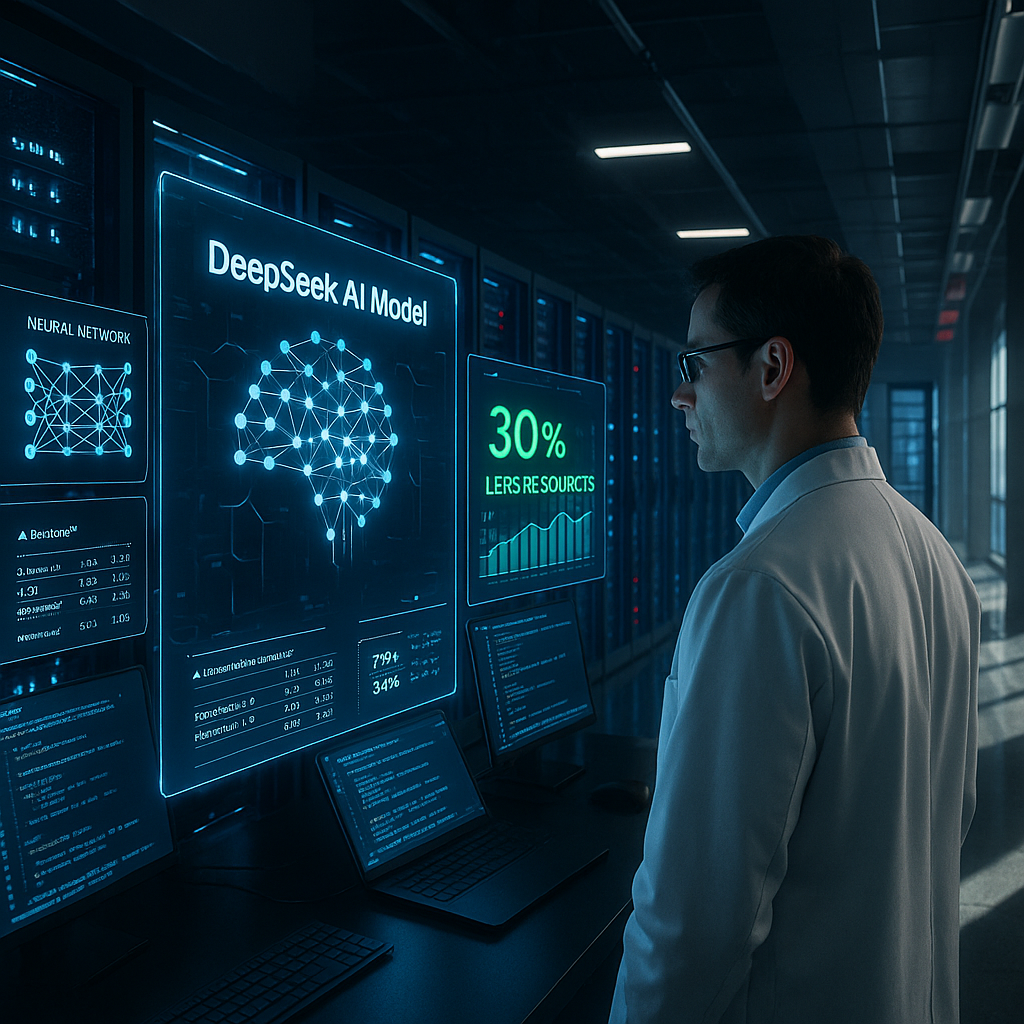
DeepSeek has unveiled its latest large language model that achieves strong results in complex reasoning and coding tasks. The model surpassed industry leaders by 17 percent on standardized benchmarks while using 30 percent less computational resources.
The Beijing-based AI lab stated that their updated architecture features a new attention mechanism that improves context handling and reduces hallucinations during technical documentation generation.
Un passo avanti. Sempre.
Unisciti al nostro canale Telegram per ricevere
aggiornamenti mirati, notizie selezionate e contenuti che fanno davvero la differenza.
Zero distrazioni, solo ciò che conta.
 Entra nel Canale
“We’ve fundamentally rethought how large language models process and retain information across extended contexts,” said Dr. Lin Wei, DeepSeek’s Chief AI Scientist. “This is not just incremental improvement. It represents a new approach to the architecture itself.”
Industry analysts noted that this development could speed up the adoption of AI assistants in software development workflows and may shift competitive dynamics within the enterprise AI market.
Also Today
AI and Hardware
Apple Delays Mixed Reality Headset Pro Release
Apple has postponed the release of its second-generation mixed reality headset from early 2026 to mid-year due to technical challenges related to thermal management and battery life.
Suppliers confirmed that production timelines have shifted, with component manufacturing now expected to increase in April instead of January.
This delay follows the first-generation Vision Pro’s mixed reception. Despite its technological strengths, the initial model encountered adoption challenges at a premium price point.
Nvidia Announces Specialized AI Chips for Healthcare
Nvidia has introduced a new line of GPUs designed for healthcare applications, featuring improved processing for medical imaging, genomic sequencing, and drug discovery algorithms.
The BioCompute series includes specialized tensor cores that accelerate biomedical computations and lower power consumption by up to 40 percent compared to general-purpose AI accelerators.
“Healthcare AI requires precision and reliability that general systems were not optimized to deliver,” said Jensen Huang at a healthcare technology summit in Boston. “These chips bring specialized architecture to meet those demands.”
Quantum Computing
IBM Achieves Quantum Error Correction Milestone
IBM has demonstrated practical quantum error correction at scale, enabling quantum calculations to proceed without degradation from environmental interference. This addresses a significant hurdle for real-world quantum computing applications.
The breakthrough allows quantum systems to maintain coherence much longer, which could make complex molecular simulations and cryptographic operations feasible.
“This achievement transforms quantum computing from a theoretical pursuit to an engineering challenge,” stated Dr. Dario Gil, IBM Research Director. “We are now focused on scaling the technology rather than proving fundamental principles.”
Quantum-Resistant Encryption Standard Finalized
The National Institute of Standards and Technology (NIST) has finalized post-quantum cryptography standards that will secure digital communications against future quantum computer attacks.
These new specifications, developed over five years, provide algorithms that can withstand quantum methods potentially capable of breaking current encryption protocols.
Organizations now have concrete guidance for implementing quantum-safe security measures, with federal systems required to start migration by July 2026.
Digital Infrastructure
Multiple Cloud Outages Reveal Systemic Vulnerabilities
Three major cloud service providers experienced significant outages this week, impacting operations across e-commerce, financial services, and healthcare sectors for durations from 4 to 11 hours.
Investigation reports identified similar root causes: cascading failures during routine maintenance that exposed hidden interdependencies among critical systems.
These incidents highlight ongoing concerns about cloud infrastructure resilience as more essential workloads shift to centralized platforms. Industry experts recommend adopting multi-region and multi-provider redundancy strategies to mitigate operational risks.
EU Digital Infrastructure Fund Allocates €7.2 Billion
The European Commission has approved a €7.2 billion investment package to enhance digital infrastructure in member states, prioritizing high-speed connectivity in rural areas and improved cybersecurity.
The funding supports the deployment of 5G networks in underserved regions, the modernization of government digital services, and the creation of four new quantum computing research centers.
Un passo avanti. Sempre.
Unisciti al nostro canale Telegram per ricevere
aggiornamenti mirati, notizie selezionate e contenuti che fanno davvero la differenza.
Zero distrazioni, solo ciò che conta.
Entra nel Canale
“This represents our commitment to digital sovereignty and ensuring technological benefits reach all European citizens,” said Digital Economy Commissioner Helena Voss during the announcement in Brussels.
What to Watch
- The Consumer Electronics Show (CES) runs from 7 to 10 January 2026 in Las Vegas, with major announcements expected from Samsung, LG, and new XR hardware companies.
- Microsoft’s quarterly earnings call is set for 23 January 2026, with a spotlight on Azure AI growth and enterprise AI adoption.
- The World Economic Forum’s special technology summit on “AI Governance and Global Cooperation” is scheduled for 3 to 5 February 2026 in Singapore, featuring tech CEOs and government officials.
- The deadline for EU Digital Markets Act compliance is 15 February 2026, requiring major platforms to implement new interoperability standards.
Conclusion
DeepSeek’s new AI model establishes a significant standard for efficiency, potentially influencing software development and the enterprise AI sector. Other major industry developments, including Nvidia’s healthcare-focused chips and advances in quantum technology, illustrate the rapid and diverse progress of the tech field. Major cloud outages serve as a reminder of persistent infrastructure challenges. What to watch: Upcoming events such as CES and regulatory deadlines will provide further insight into the technology sector’s shifting priorities.


Leave a Reply