

Key Takeaways
- AI accelerates ransomware evolution: Criminals are using AI to automate and refine attacks, making them harder to detect and more persuasive through personalized phishing tactics.
- 2025 projected as record high: Cybersecurity reports predict ransomware cases will break previous records next year, impacting organizations of all sizes and sectors.
- Small businesses increasingly targeted: Lower security budgets and remote work trends make small and mid-sized companies prime victims for AI-driven attacks.
- Experts urge proactive defense: Security specialists recommend early adoption of AI-powered cybersecurity tools and regular staff training to minimize risk.
- Big tech eyes enhanced solutions: Major cybersecurity firms are developing advanced AI systems designed to outpace evolving ransomware threats, with new offerings expected in late 2024.
Introduction
Artificial intelligence is driving a significant rise in ransomware attacks worldwide. Cybersecurity analysts project a record-breaking surge in 2025 as AI enables faster, more targeted, and harder-to-detect intrusions. This escalation increases risks for businesses of all sizes—especially small firms, and individuals. In response, experts and technology companies are prioritizing advanced AI-powered defenses and focusing on ongoing digital awareness.
How AI Is Supercharging Ransomware Attacks
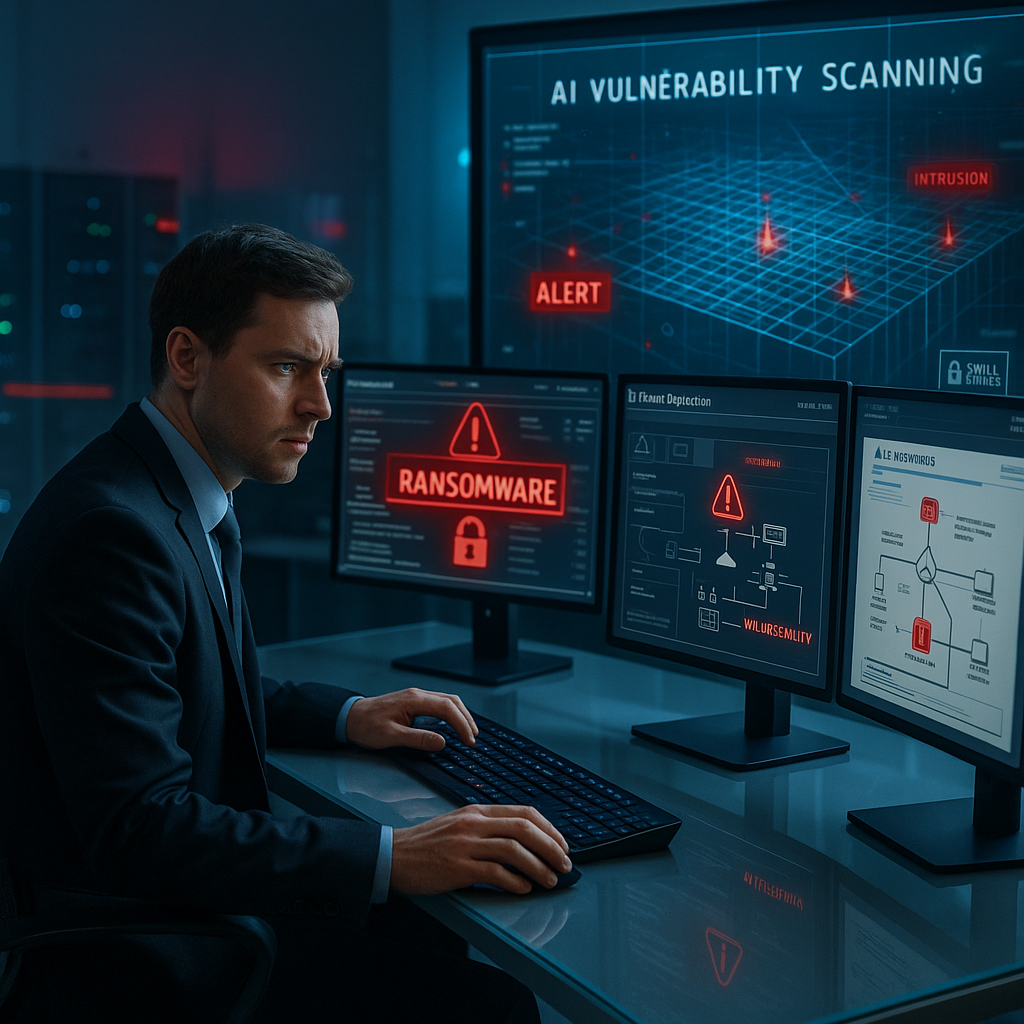
Artificial intelligence tools have sharply reduced the time criminals need to identify network vulnerabilities. Recent research by CyberShield Technologies shows that AI-powered scanning systems can complete thorough security assessments in under 30 minutes. By comparison, traditional manual methods often require days or weeks.
Machine learning algorithms now analyze patterns from previous breaches to automatically develop more effective attack strategies. Dr. Sarah Chen, lead researcher at the Global Cybersecurity Institute, stated that AI systems learn from each intrusion attempt, making detection and blocking increasingly challenging.
Natural language processing has also transformed phishing campaigns. Attackers can generate highly convincing, company-specific emails in multiple languages. Internal studies by SecurityFirst Labs indicate that AI-crafted phishing messages achieve click-through rates 65% higher than traditional emails.
Un passo avanti. Sempre.
Unisciti al nostro canale Telegram per ricevere
aggiornamenti mirati, notizie selezionate e contenuti che fanno davvero la differenza.
Zero distrazioni, solo ciò che conta.
 Entra nel Canale
2025 Projections Show Alarming Trends
Industry analysts predict that AI-powered ransomware attacks will increase by 400% between 2023 and 2025, according to forecasts from major security firms. BlackGuard’s latest threat assessment estimates that global ransomware damages could exceed $30 billion by 2025.
Remote work infrastructure remains particularly vulnerable. Gartner reports that 72% of businesses lack adequate security measures for distributed operations. Marcus Williams, chief analyst at CyberTrends Research, stated that the combination of AI tools and poorly secured remote networks creates conditions that can lead to a surge in attacks.
Financial services and healthcare organizations face the highest risks. Projections indicate that attack attempts against these sectors could double every six months through 2025. Small and medium-sized businesses in these industries are especially exposed.
Small Business Vulnerabilities
Small businesses are increasingly targeted due to limited IT resources and security expertise. A recent survey by SmallBiz Security found that 83% of small companies lack basic endpoint protection capable of detecting AI-driven threats.
The shift to remote operations has expanded the attack surface. Employees often use personal devices and home networks for business activities. Patricia Rodriguez, small business security specialist at CyberDefend, noted that small businesses rarely have the infrastructure necessary to secure multiple remote access points.
Cloud service misconfiguration adds another layer of risk. Many small companies lack expertise in securing cloud-based operations, and security audits reveal that 67% of small businesses have at least one significant cloud security gap.
Expert Security Recommendations
Security experts stress the importance of regular employee training focused on recognizing AI-generated phishing attempts and social engineering tactics. Monthly updates to training materials are advised to keep pace with evolving AI-driven threats.
The implementation of multi-factor authentication and zero-trust architecture is recommended for critical protection against automated attacks. James Chen, chief security officer at NetGuard Solutions, explained that these fundamental measures are even more important as AI increases attack sophistication.
Quarterly testing of system backups and comprehensive incident response plans is essential. Security professionals emphasize that preparation and prevention remain far more cost-effective than recovery after a successful attack. For actionable steps, review the daily cyber hygiene checklist for online safety to strengthen your defenses against evolving threats.
Big Tech Response and Innovation
Major technology companies are developing AI-powered defense systems capable of identifying and responding to threats in real time. Microsoft’s Security AI platform now processes over 24 trillion security signals daily to detect emerging attack patterns.
Google’s Chronicle security division has introduced advanced threat detection tools that use machine learning to recognize suspicious network behavior. Amanda Thompson, Chronicle’s head of innovation, stated that the company is leveraging AI capabilities both for detection and defense.
Industry collaboration is also increasing. Leading tech firms are sharing threat intelligence through the AI Security Alliance. This cooperative approach enables smaller organizations to benefit from enterprise-level security insights and strategies. To understand how these trends intersect with everyday tech safety, see the guide on spotting scams and securing your accounts.
Conclusion
The rapid adoption of AI by both cybercriminals and security professionals marks a pivotal moment for ransomware risk, particularly for small businesses and remote operations. As automated attacks intensify, effective employee training and advanced security tools remain critical. What to watch: industry forecasts anticipate a sharp rise in attack attempts through 2025, with additional AI-driven defensive solutions expected from tech firms in the near future. For more on best practices and technology defenses, explore the password manager guide and essential phishing email tips to further harden your protection strategy.



Leave a Reply