

Key Takeaways
- Apple fined $115 million for privacy violations: Italian authorities ruled that Apple mishandled user data and failed to provide transparent choices, breaching national privacy regulations.
- Regulators cite inadequate data protection: The investigation found gaps in how the App Store collected, processed, and shared consumer information.
- Potential ripple effect for Big Tech: This case may influence how other countries approach privacy enforcement against major tech platforms.
- Apple to appeal decision: The company has stated it will contest the fine, maintaining it complies with all applicable privacy laws.
- Broader debate on privacy standards: The ruling highlights tensions between evolving global privacy expectations and the business models of platform providers like Apple.
- Next steps: Possible EU-level review: Italian officials have called for European data protection bodies to examine similar practices, signaling possible further action.
Introduction
Apple has been fined $115 million by Italian regulators after authorities determined that the company failed to adequately protect user privacy on its App Store, violating Italy’s strict data laws. The ruling, which Apple plans to appeal, underscores mounting regulatory scrutiny for Big Tech platforms and could shape how digital privacy is enforced across Europe.
Key Facts About the Apple Fine
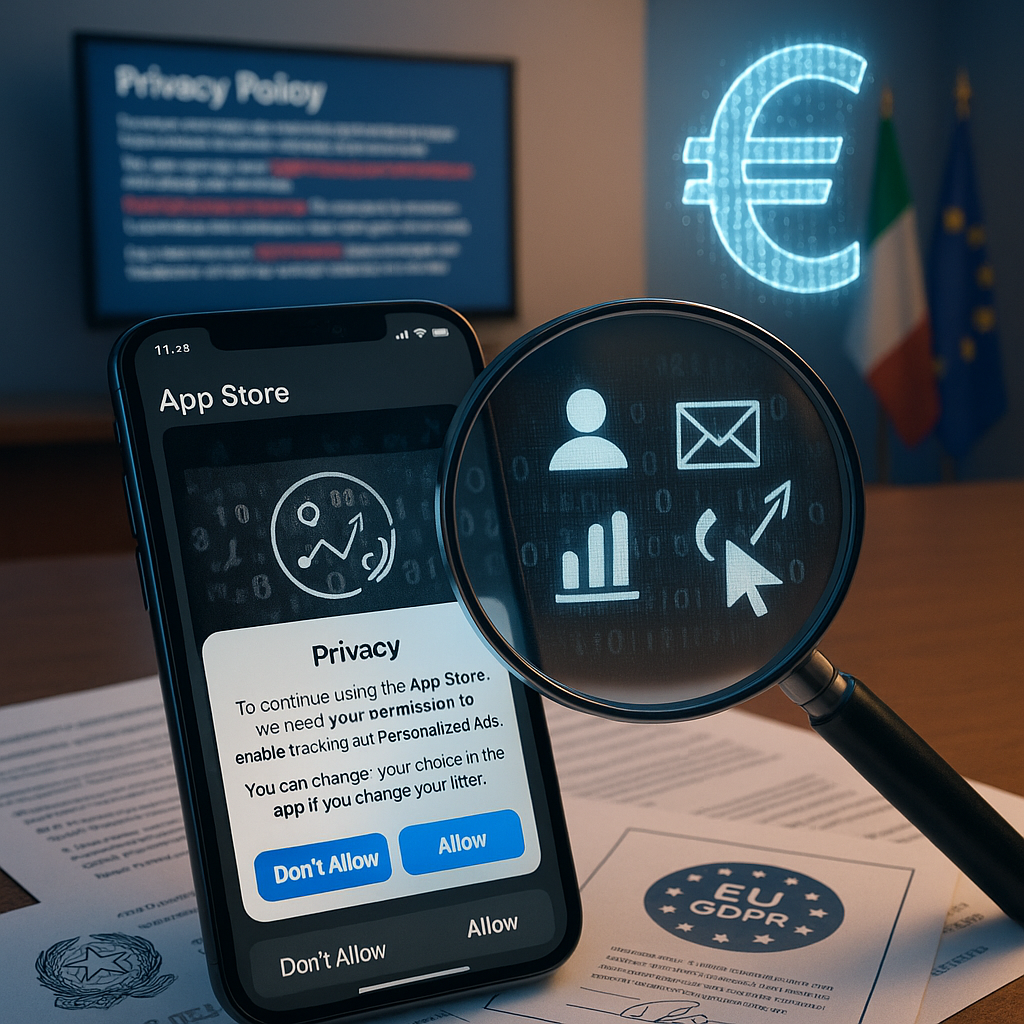
Italy’s data protection authority (Garante) fined Apple €120 million ($115 million) for privacy violations related to its App Store practices. The penalty was announced following an investigation that determined Apple had failed to properly obtain user consent for data collection and processing.
The fine targets how Apple handles user data within its App Store ecosystem. The regulator found that the company was using personal information for commercial purposes without transparent disclosure or explicit consent mechanisms. Garante stated that the violations affected millions of Italian users.
App Store practices have long been a focal point for privacy and competition regulators, and this recent decision may further shape Apple’s data handling obligations in the digital ecosystem.
Un passo avanti. Sempre.
Unisciti al nostro canale Telegram per ricevere
aggiornamenti mirati, notizie selezionate e contenuti che fanno davvero la differenza.
Zero distrazioni, solo ciò che conta.
 Entra nel Canale
Apple has 30 days to respond to the regulatory action and must implement changes to its data handling practices in Italy. This is one of the largest privacy fines imposed against the company in Europe. It also highlights increasing regulatory scrutiny of major technology companies’ data practices.
What Regulators Found
The Italian regulator found that Apple violated the General Data Protection Regulation (GDPR) by not obtaining valid user consent before collecting and processing personal data through the App Store. Investigators concluded that the company’s privacy notices lacked sufficient transparency about how user information would be used for personalized advertising and commercial profiling.
Garante specifically cited Apple’s consent mechanisms as problematic, noting that users were not given clear, straightforward options to decline data processing. The consent process was embedded within complex terms and conditions, instead of being presented as an explicit, separate choice.
The investigation also identified inconsistencies between Apple’s public privacy statements and its actual data handling practices. The regulator stated that companies cannot claim to prioritize privacy while designing systems that make it difficult for users to exercise meaningful control over their personal information.
Apple’s Response
Apple has expressed disagreement with the Italian regulator’s findings and announced plans to appeal the decision. The company stated that its data practices fully respect the privacy choices of its users and comply with GDPR requirements across Europe.
Apple emphasized its commitment to privacy as a fundamental human right, pointing to its App Tracking Transparency framework as evidence of its privacy-focused approach. The company argued that the regulator misinterpreted the way its data collection systems work and the extent of user control available within iOS.
Privacy advocate compared to other tech giants is a label that Apple has long embraced, making this decision notable in the larger debate over digital privacy and platform responsibility.
Apple also stated it would work with Italian authorities to address concerns while pursuing legal avenues to challenge the fine. The company has historically positioned itself as a privacy advocate compared to other tech giants. That makes this ruling significant for its brand.
Background on European Privacy Enforcement
This Italian fine is part of a broader trend of European privacy enforcement actions against leading technology companies. In 2023, Irish regulators fined Meta €1.2 billion over EU-US data transfers. Amazon and Google have also faced similar penalties for various GDPR violations across different member states.
European data protection authorities have increasingly coordinated their approach to technology regulation, with Italy’s Garante known as one of the more assertive agencies. The European Data Protection Board, which helps coordinate consistent GDPR enforcement, has supported stronger action against systematic privacy violations.
Fines have grown in both frequency and scale since the introduction of GDPR in 2018, reflecting a dramatic increase in more confident interpretations by regulators.
According to Gabriela Zanfir-Fortuna, privacy policy expert at the Future of Privacy Forum, regulators have become more confident in their interpretations and more willing to impose significant penalties when violations are identified.
Impact on Users and the Industry
The ruling may result in more transparent App Store privacy controls for Italian users, with possible effects extending to other European markets. Apple could be required to redesign its consent flows to provide clearer opt-in mechanisms before collecting data for advertising or analytics.
Privacy by design principles are becoming a regulatory expectation, signaling to other tech firms that user-centric safeguards must be built in from the start, not bolted on as an afterthought.
For the tech industry, the fine signals intensifying regulatory pressure to implement privacy by design principles, rather than addressing compliance retroactively. Other app store operators, such as Google, may review their consent practices to avoid similar penalties.
While users may not see immediate changes in their App Store experience, the decision is likely to lead to long-term improvements in transparency and user choice. Privacy advocates have welcomed the ruling as a step toward greater user control over personal data in digital marketplaces.
Un passo avanti. Sempre.
Unisciti al nostro canale Telegram per ricevere
aggiornamenti mirati, notizie selezionate e contenuti che fanno davvero la differenza.
Zero distrazioni, solo ciò che conta.
Entra nel Canale
What Happens Next
Apple has 30 days to submit a formal response to Italian authorities and implement initial remediation steps. The appeal process could take 12 to 18 months to resolve through Italy’s administrative courts. During this period, Apple may need to place funds in escrow.
Italian regulators will review Apple’s compliance plan and may require specific technical changes to the App Store’s consent mechanisms. If Apple does not implement satisfactory changes within the specified timeframe, additional enforcement actions could follow.
This case is expected to influence ongoing privacy discussions at the EU level. It could also inform the European Commission’s approach to platform regulation under the Digital Markets Act and Digital Services Act. The Commission has stated it will monitor national enforcement actions when developing its own implementation guidelines.
Conclusion
Italy’s $115 million penalty highlights growing European pressure on tech giants to deliver transparent, user-centered privacy controls. The outcome may set new standards for consent requirements in digital marketplaces across Europe. What to watch: Apple’s formal response and remediation plan are due within 30 days, with further actions possible pending the Italian regulator’s review.
User control over personal data continues to be at the heart of Europe’s evolving privacy landscape—forcing the tech industry to adapt both its business models and its approach to digital rights.




Leave a Reply