


Key Takeaways
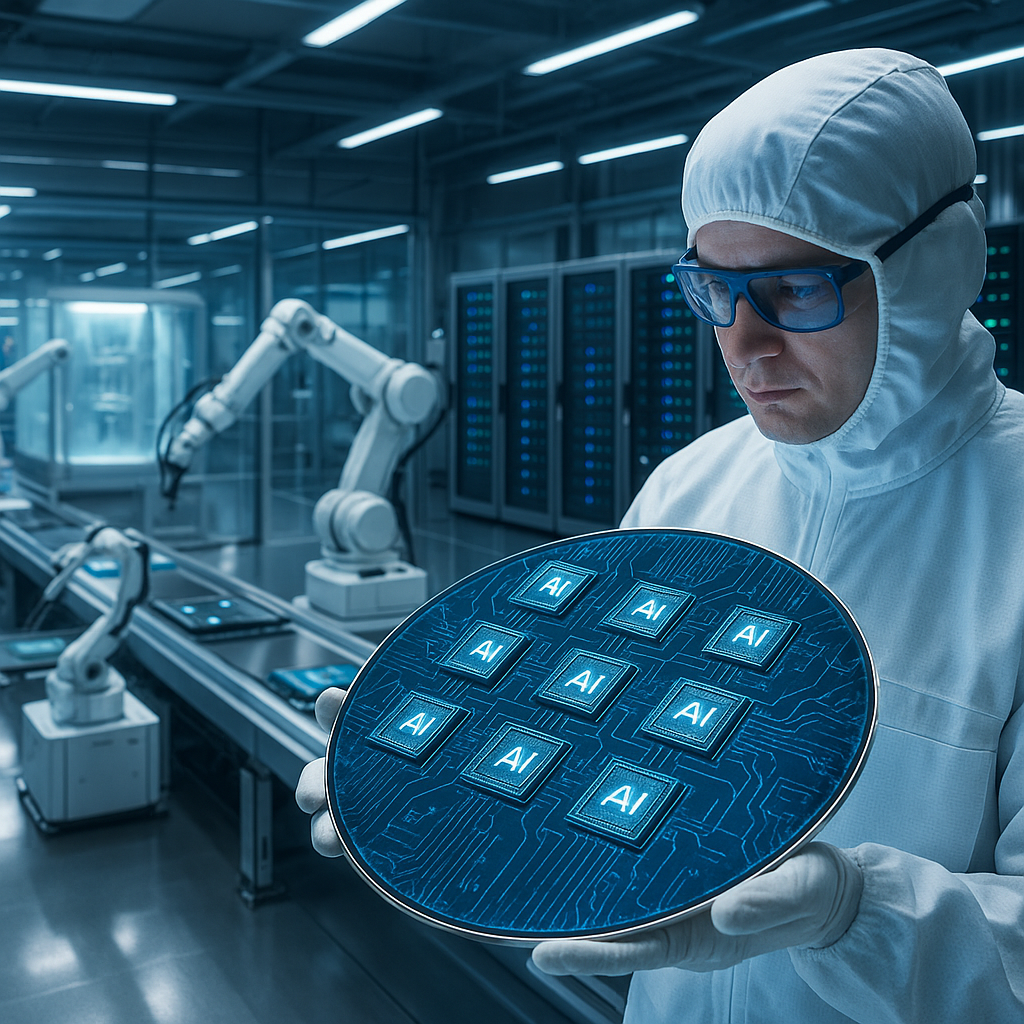
- Nvidia led today’s tech industry press review with a 62% revenue increase, driven by sustained demand for AI chips as reported on 24 November 2025. Amazon, Salesforce, and xAI also revealed significant moves in generative AI infrastructure and strategy.
- Top story: Nvidia’s 62% revenue surge highlights persistent AI chip demand, challenging concerns about an industry bubble.
- Salesforce’s CEO has shifted from ChatGPT to adopt Google’s Gemini 3 AI in corporate workflows.
- Amazon has announced a $15 billion bond sale to expand its AI infrastructure.
- xAI secured a major Saudi contract, supplying 600,000 Nvidia chips for regional AI projects.
- These developments reflect intensifying global investment and competition in generative AI hardware and services.
Introduction
On 24 November 2025, Nvidia reported a 62% revenue surge. This demonstrates robust global demand for AI chips and ongoing industry growth, even as some had worried about a potential bubble. Amazon’s $15 billion bond sale for AI infrastructure underscores how quickly the sector is evolving. In this tech industry press review, we’ll look at the latest innovations and shifting strategies among the biggest names in tech.
Top Story
Nvidia Revenue Surges Amid Industry Bubble Concerns
Nvidia announced a 74% year-over-year revenue increase in its recent quarterly earnings, reaching $32.4 billion and surpassing Wall Street expectations by $3.1 billion. The company’s data center segment, which primarily supports AI applications, grew by 112% compared to the previous year, accounting for $24.8 billion of total revenue. CEO Jensen Huang attributed this growth to “unprecedented demand for accelerated computing in generative AI deployments.”
Market analysts are split on whether these results signal sustained healthy expansion or hint at a sector on the verge of overheating. Sarah Johnson, technology research lead at Morgan Stanley, expressed caution, saying “the current pace of AI infrastructure spending may not be sustainable.” She notes that many firms are making substantial investments before returns are clear. On the other hand, Bank of America analysts are convinced this isn’t a repeat of the dot-com era, arguing that today’s spending is grounded in visible productivity gains across real-world business.
Nvidia improved its supply chain to match rocketing demand. Production capacity shot up by 53% over the last two quarters. Alongside that, the company announced a planned $30 billion investment to expand manufacturing partnerships with TSMC and Samsung through 2027. This sounds like a company confident about future demand for AI computing.
Un passo avanti. Sempre.
Unisciti al nostro canale Telegram per ricevere
aggiornamenti mirati, notizie selezionate e contenuti che fanno davvero la differenza.
Zero distrazioni, solo ciò che conta.
 Entra nel Canale
Some industry experts are now pointing to interconnected investments in AI infrastructure across the tech world as signs of lasting market change, not just a speculative bubble. Thomas Wei of the Technology Policy Institute commented on “coordinated buildouts of computational capacity, storage solutions, and networking infrastructure that indicate systematic transformation.”
Also Today
Microsoft Restructures Cloud Division
Microsoft revealed a major reorganization of its Azure cloud division, creating a new unit focused solely on AI infrastructure. About 4,200 employees will now shift their efforts exclusively toward generative AI and large language model deployment services. Jason Zander, Corporate Vice President, explained this “aligns our organizational structure with market demands and customer needs in the AI-first economy.”
As part of these changes, Microsoft plans to drop $15 billion into data centers tailored for AI workloads over the next three years. New data facilities in Virginia, Washington state, and Finland will feature beefed-up power and cooling systems for high-density computing. Analysts think these investments could lift Microsoft’s total AI computing capacity by as much as 65% once everything is up and running.
Apple Delays AR Headset Launch
Apple announced it’s pushing back the launch of its augmented reality headset until mid-2026. This is now the third time it’s been postponed; originally it should have arrived in early 2024. The reason? The company says it’s for “technical refinements to ensure the best possible user experience.”
Some supply chain sources say display manufacturing yields are still hovering below 40%, while Apple’s mass production goal is 85%. The AR headset, code-named “Odyssey,” is said to combine Apple’s custom silicon with advanced micro-LED displays and spatial interaction tech. According to analysts, Apple could lose around $4 billion in revenue over the 2025 holiday season because of the delay.
Google Discontinues Multiple AI Projects
According to an internal memo cited by Bloomberg, Google has pulled the plug on five AI research initiatives as it works to consolidate its artificial intelligence programs. Among the discontinued efforts: a conversational search assistant, an AI-based code documentation tool, and three machine learning projects focused on multimodal understanding.
Demis Hassabis, CEO of DeepMind and head of Google’s unified AI division, made it clear that resources will now be concentrated “on fewer, higher-impact initiatives that directly align with our core business objectives,” as he put it. Roughly 230 researchers will find new roles inside Google’s remaining AI projects. This kind of shift mirrors what’s going on at Meta and Amazon, as AI work moves from wide-open research toward more commercially focused development.
Market Wrap
Tech Sector Records Mixed Performance
Tech stocks were all over the place on 24 November 2025. The Nasdaq Composite inched up 0.4%, but the S&P 500 Technology Select Sector index slipped 0.3%. Semiconductor shares were the winners for the day—thanks to Nvidia’s blockbuster report—pushing the Philadelphia Semiconductor Index up 2.1% to an all-time high.
Cloud providers saw some mild gains. Amazon Web Services’ parent company edged up 0.8%, and Microsoft climbed 1.2%. On the flip side, consumer tech firms dragged things down. Apple shares fell 1.7% after its AR headset delay, and Meta lost 2.3% on worries about advertising revenue.
Notable Stock Movements
Nvidia shares jumped 8.4% to close at $1,247, tacking on roughly $214 billion to its market capitalization in just one day. The stock’s forward price-to-earnings ratio hit 42.8, way above its five-year average of 31.5. That’s a clear sign of soaring growth expectations.
Interestingly, some smaller AI infrastructure players did even better, at least in percentage terms: Supermicro Computer popped 12.7%, and Arista Networks rose 6.3%. Traditional hardware makers didn’t fare as well. Dell finished the day down 3.2%, HP Inc. dropped 2.5%, as investors shifted their focus to firms laser-focused on AI.
What to Watch
- AWS re:Invent conference in Las Vegas from 2 to 6 December 2025, featuring CEO Adam Selipsky’s keynote on 3 December 2025
- Apple Worldwide Developers Conference (WWDC) scheduled for 8 to 12 June 2026, expected to showcase AR and VR software updates
- Quarterly earnings reports from Dell (26 November 2025), Salesforce (3 December 2025), and Oracle (10 December 2025)
- Federal Trade Commission public hearings on AI industry concentration on 15 and 16 December 2025 in Washington, DC
- Consumer Electronics Show (CES) from 6 to 9 January 2026 in Las Vegas, highlighting major product launches
Conclusion
Nvidia’s remarkable growth signals a big shift in the tech sector, making AI infrastructure investment a central piece of the competitive landscape for leading companies. Across the board, organizations are changing their strategies—and spending big—to beef up generative AI capacity, suggesting deeper, long-lasting changes for the whole industry. It’ll be telling to watch what’s announced at AWS re:Invent, Apple’s WWDC, and at those all-important regulatory hearings on AI market power in the coming months.



Leave a Reply