
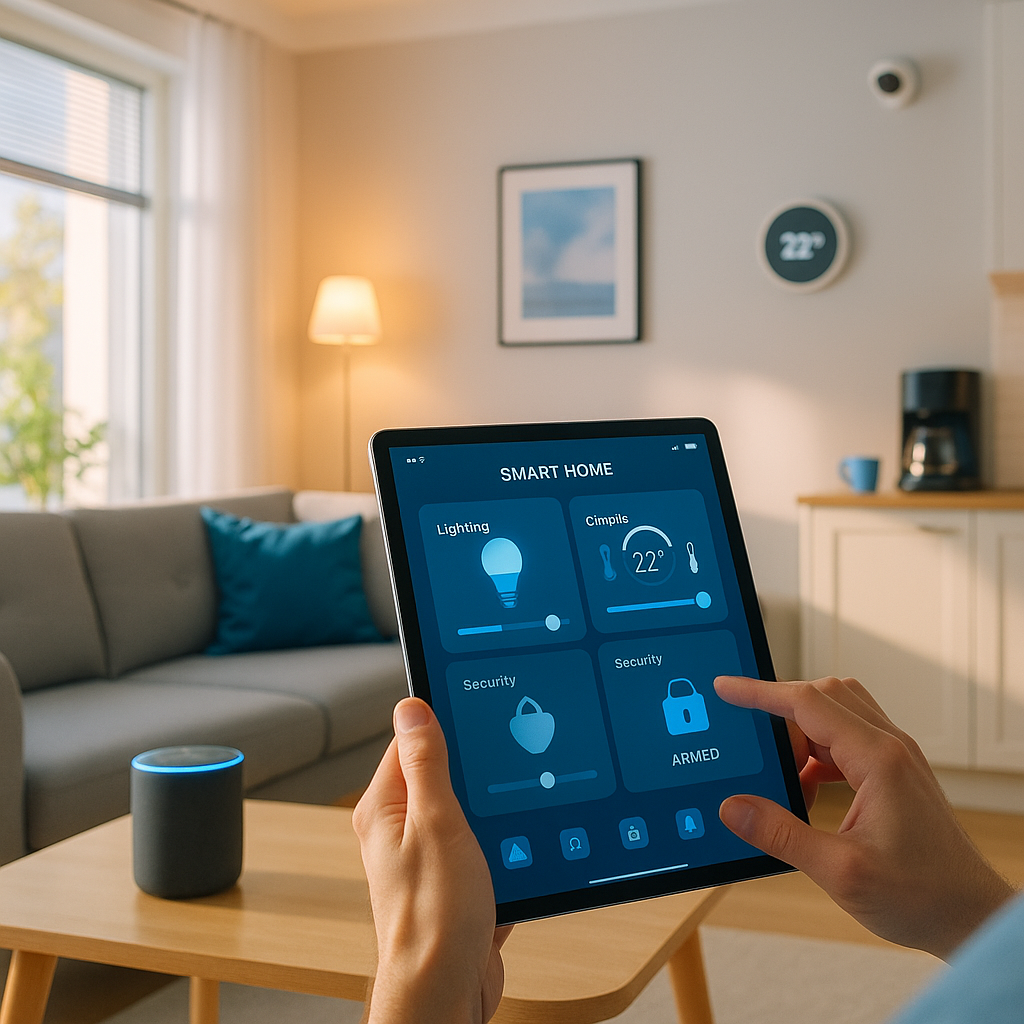

Key Takeaways
-
Smart home technology is revolutionizing the way we manage daily life. By seamlessly connecting devices and automating repetitive tasks, it transforms everyday routines into smoother, faster, and more enjoyable experiences. This case study highlights practical benefits and applications, showing how smart systems add measurable value that goes well beyond mere convenience.
-
Effortless mornings through automation: Smart home setups streamline the start of your day. Imagine your coffee brewing automatically, lights adjusting gradually to wake you up gently, and voice-activated reminders prompting key tasks. By automating these processes, you free up mental energy to focus on what truly matters.
-
Centralized control for unmatched convenience: Manage everything from thermostats to security cameras through a single app or voice assistant. Gone are the days of juggling multiple remotes or apps; with integrated control, managing your home becomes intuitive and efficient.
-
Environments that adapt to your lifestyle: Smart homes learn your habits and preferences, adjusting temperature, lighting, and even music to match your mood or activity. This creates personalized spaces that continually evolve with your needs.
-
Sustainable energy usage that benefits your wallet and the planet: Intelligent automation of lighting, appliances, and climate systems reduces unnecessary energy consumption. This means lower utility bills for you and a reduced carbon footprint for the environment.
-
Real-time custom alerts for greater peace of mind: Receive immediate notifications about potential security breaches, maintenance needs, or unexpected activity. These proactive updates help prevent minor issues from becoming major problems, whether you’re at home or away.
-
Deep integration with daily tools and services: Your smart home can sync with calendars, shopping lists, and entertainment platforms, ensuring every aspect of your day flows together smoothly. This holistic connectivity streamlines routines for maximized productivity.
-
Scalable systems that grow with you: As your needs change, today’s smart home ecosystems allow effortless expansion. Adding new devices or automation routines is simple, ensuring your setup remains current without constant reconfiguration.
Throughout this case study, you’ll discover that smart homes aren’t just futuristic novelties. They represent a new standard for comfortable, efficient, and responsive living. Let’s explore compelling real-world use cases that reveal the full potential of connected living.
Introduction
Imagine waking up to a home that’s already working for you. Your coffee is brewed, lights cast a gentle glow, and your schedule is displayed on the kitchen screen. This isn’t science fiction; it’s the practical power of smart home technology in action. Connected living is revolutionizing daily routines, improving not only the speed of tasks but also the joy and simplicity of managing your day.
This case study reveals how smart integrations transform average homes into adaptive, intelligent environments tailored for optimal comfort, efficiency, and peace of mind. You’ll see how these solutions streamline mornings, centralize control, save energy, and ultimately deliver measurable value to residents.
The Evolution of Smart Home Technology
Smart home technology has rapidly evolved from experimental gadgets into robust, interconnected ecosystems. What began with programmable thermostats and remote-controlled switches has given rise to entire networks of intelligent devices that adapt to our needs and anticipate our routines.
Un passo avanti. Sempre.
Unisciti al nostro canale Telegram per ricevere
aggiornamenti mirati, notizie selezionate e contenuti che fanno davvero la differenza.
Zero distrazioni, solo ciò che conta.
 Entra nel Canale
From Novelty to Necessity
Initially, smart home devices were perceived as luxuries or curiosities. Programmable thermostats and remote lighting systems added modest convenience but lacked cohesive functionality. As technology matured, the gap between isolated gadgets and integrated solutions became apparent.
The modern smart home is a holistic system, uniting lighting, security, entertainment, and climate control under one platform. Devices communicate with each other and with the user, creating responsive, intelligent environments. Market data now shows the average connected home features over 12 devices, demonstrating smart tech’s move from niche luxury to mainstream necessity.
This transformation has been propelled by increasing affordability, improved wireless connectivity, and the rise of centralized control. No longer just about gadgets, connected living now centers on seamless user experiences that deliver genuine daily impact.
The Connected Ecosystem Advantage
The real breakthrough in smart home technology lies in ecosystem integration. Instead of juggling dozens of standalone apps or remotes, users now benefit from systems in which every device contributes to a cohesive, automated workflow.
Take, for example, a motion detector sensing your arrival in the evening. It can trigger exterior lighting, adjust the interior temperature, play your favorite playlist, and even display reminders. All are executed in concert through centralized automation. This type of system-connected response turns convenience into comprehensive home management.
Voice assistants such as Amazon Alexa, Google Assistant, and Apple’s HomeKit further enhance accessibility. With natural language commands or simple taps, users control virtually every aspect of their home, democratizing access regardless of technical skill. The ecosystem approach fosters a user-centric model, where technology adapts to individuals, not the other way around.
These innovations have blurred the distinction between technology and daily living. Modern smart homes don’t just react to our input. They anticipate needs, enable proactive management, and deliver comfort in ways that were once unimaginable.
Smart Home Daily Routines in Action
The practical impact of smart home technology is best understood by examining how it elevates everyday activities, bringing efficiency, comfort, and predictability to once-chaotic routines.
The Automated Morning Routine
Mornings set the tone for the day, and smart automation eliminates friction at every step:
-
Gentle wake-up experience: Replace harsh alarms with lighting that mimics sunrise and soft music that gradually increases in volume. Devices like Philips Hue bulbs and Google Nest speakers offer customizable wake-up sequences for a smoother start.
-
Environment readiness: While you wake, your home prepares. Thermostats adjust the temperature, bathroom heaters activate for comfort, and connected kitchen appliances brew coffee. Smart displays summarize news and appointments, ensuring a stress-free departure.
-
Assisting your transition: Ready to leave? Smart assistants provide timely weather or traffic updates, while security systems auto-lock doors and activate surveillance. The potential for forgotten tasks is minimized, delivering peace of mind as you step out.
These automations are not exclusive to tech enthusiasts or early adopters. For families and busy professionals alike, even small time savings compound. Users commonly report reclaiming 30 or more minutes each morning, time which can be reinvested in wellness, family, or productivity.
Centralized Control and Monitoring
Effective home management hinges on quick access and full visibility across systems:
-
Unified dashboards: Comprehensive apps and smart home hubs present an at-a-glance overview of all devices, usage patterns, and security indicators. No more flipping between siloed tools.
-
Remote access: Monitor and adjust your home from anywhere. Respond to unexpected alerts, let in service personnel, or tweak climate controls for pets, all via smartphone.
-
Intelligent notifications: Rather than relying on constant user checking, smart systems push alerts based on preferences and thresholds. For example, a water leak sensor can send an urgent phone alert, while less time-sensitive updates can be aggregated for later review.
Centralized control transforms homeownership into a proactive rather than reactive experience. The clarity and responsiveness it delivers increase both property value and occupant confidence.
Personalization and Learning Capabilities
Modern smart homes shine in their ability to learn and personalize the environment:
-
Pattern recognition: Over time, thermostats, lighting, and entertainment systems adjust schedules based on detected behavior. Devices like Ecobee thermostats can differentiate occupancy patterns and tailor energy use accordingly.
-
User-specific customization: Homes distinguish between household members, offering distinct experiences (one user’s favorite lighting or playlist in the evening, another’s wellness routine in the morning). Personalization becomes seamless and automatic.
-
Contextual intelligence: Advanced systems adapt based on external factors: weather, time of day, or special routines like holidays. For example, smart blinds may respond to a heatwave by closing automatically for cooling efficiency. Whether hosting guests, heading out of town, or observing changing daylight, the home continually adapts.
With the rise of machine learning, this tailored responsiveness will only become richer and more intuitive, creating home environments that genuinely “understand” their occupants’ needs.
Beyond Convenience: Tangible Benefits of Smart Home Integration
While initial excitement often centers on convenience, the broader benefits of smart home systems are both practical and substantial, spanning energy savings, security, health, and overall quality of life.
Energy Efficiency and Cost Savings
Smart homes take energy efficiency to a new level by actively managing consumption:
Un passo avanti. Sempre.
Unisciti al nostro canale Telegram per ricevere
aggiornamenti mirati, notizie selezionate e contenuti che fanno davvero la differenza.
Zero distrazioni, solo ciò che conta.
Entra nel Canale
-
Automated climate control: Devices like Nest adjust heating and cooling in real-time based on learning when rooms are in use, local weather, and personal schedule. On average, users report heating and cooling savings ranging from 12% to 23%, according to several industry studies.
-
Adaptive lighting: Motion sensors turn off lights in unused rooms while daylight harvesting systems dim or brighten based on available sunlight. Many homeowners see lighting-related electric bills drop by up to 26%.
-
Device-level monitoring: Advanced platforms track the energy use of specific appliances, identifying “energy vampires.” Automatic shifting of energy-intensive tasks, such as laundry, to off-peak hours can further lower costs.
Savings add up quickly. Homes with integrated energy management save $300-$500 or more per year. Environmental benefits accompany these financial gains, with greater adoption of these technologies making a measurable difference in community carbon footprints.
smart home hacks for energy savings can be especially useful for beginners in optimizing their consumption patterns without the need for major investments.
Enhanced Security and Peace of Mind
The security potential of smart home systems goes far beyond door alarms:
-
24/7 monitoring: Integrated cameras, motion detectors, door/window sensors, and alarm systems work together, providing complete property coverage. AI-powered analytics can identify suspicious behavior patterns before incidents occur.
-
Active deterrence: Automated routines can simulate occupancy, turn on exterior lights, and issue warnings over speakers if unusual activity is detected. This proactive approach to home security helps deter potential intruders.
-
Rapid, intelligent response: When an alert is triggered, users receive real-time video, can confirm incidents via smartphone, and communicate directly with emergency responders. This reduces false alarms and ensures appropriate action.
The suite of security features doesn’t stop at intrusion prevention. Smoke and CO2 sensors, water leak detectors, and remote emergency controls safeguard homes from a variety of common household risks. For families with children, elderly relatives, or frequent travelers, this comprehensive protection is invaluable.
If you’re considering bolstering your digital defenses, explore smart home security tips for practical steps that extend protection to every connected device in your home setup.
Digital Lifestyle Integration
Smart homes serve as the backbone for the modern digital lifestyle, integrating work, play, and wellness:
-
Home entertainment orchestration: With a single voice command, smart homes can dim lights, queue up movies, and adjust sound settings. Kitchen smart devices can even sync with entertainment cues (like popcorn machines activating for family movie night).
-
Health and wellness support: Smart devices support well-being by tracking air quality, optimizing sleep environments, and monitoring activity. For those managing allergies or conditions requiring close environmental monitoring, these systems are transformative.
-
Productivity tools: The remote work trend has amplified the value of smart setups. Smart lighting improves video call quality, while noise-canceling features and adaptive layouts enhance focus. Automated routines can shift home settings between work, exercise, and relaxation modes throughout the day.
-
Accessibility enhancements: For people with mobility challenges, voice-activated door locks, automated lighting, and app-based controls deliver greater independence and comfort within the home.
To see how automation connects to a broader digital workflow, check out advice on how to build a smart digital routine and maximize the synergy between smart homes, apps, and daily productivity.
Broader Applications Across Industries
Smart home innovations are inspiring similar efficiencies and adaptive environments in other industries:
-
Healthcare: Hospitals and clinics now use smart sensors for patient monitoring and automated climate control, enhancing patient comfort and operational efficiency. Home-based health management systems help elderly or chronically ill patients maintain independence while keeping caregivers informed.
-
Education: Smart classrooms leverage automated lighting, climate, and digital content delivery to create optimal learning environments, adapting in real-time to group needs and schedules.
-
Retail: Stores leverage sensor-driven lighting, digital signage, and IoT-enabled supply chains to optimize inventory management and the customer experience.
-
Environmental science: Smart grid technologies use data from connected devices at home and work to balance energy loads, integrate renewables, and promote more sustainable resource use at scale.
Homeowners interested in expanding their connected ecosystem on a budget may benefit from practical guidance in DIY smart home automation, making advanced technology accessible without a hefty price tag.
Conclusion
The rise of smart home technology signals a new era in how we interact with the spaces we inhabit. Today’s connected homes are far more than a collage of gadgets. They are intelligent, adaptive ecosystems that learn, anticipate, and serve their occupants. From meaningful energy savings and robust security to total lifestyle integration and personalized comfort, the measurable benefits extend well past convenience.
As tech ecosystems become more interoperable and advancements in machine learning fuel even deeper personalization, smart homes will redefine modern living. The next generation of connected residences will not only enhance everyday comfort but also play a central role in environmental stewardship and digital health. Looking forward, those who embrace adaptable, user-centered smart technologies will not only enhance their quality of life but will also position themselves at the forefront of innovation. The real challenge lies not in whether to adopt smart home technology, but in how creatively and effectively we harness its potential to shape a brighter, more responsive future.
If you’re ready to make your home greener and more efficient, explore these recommended eco gadgets that complement any smart home and help you live sustainably.




Leave a Reply