

Key Takeaways
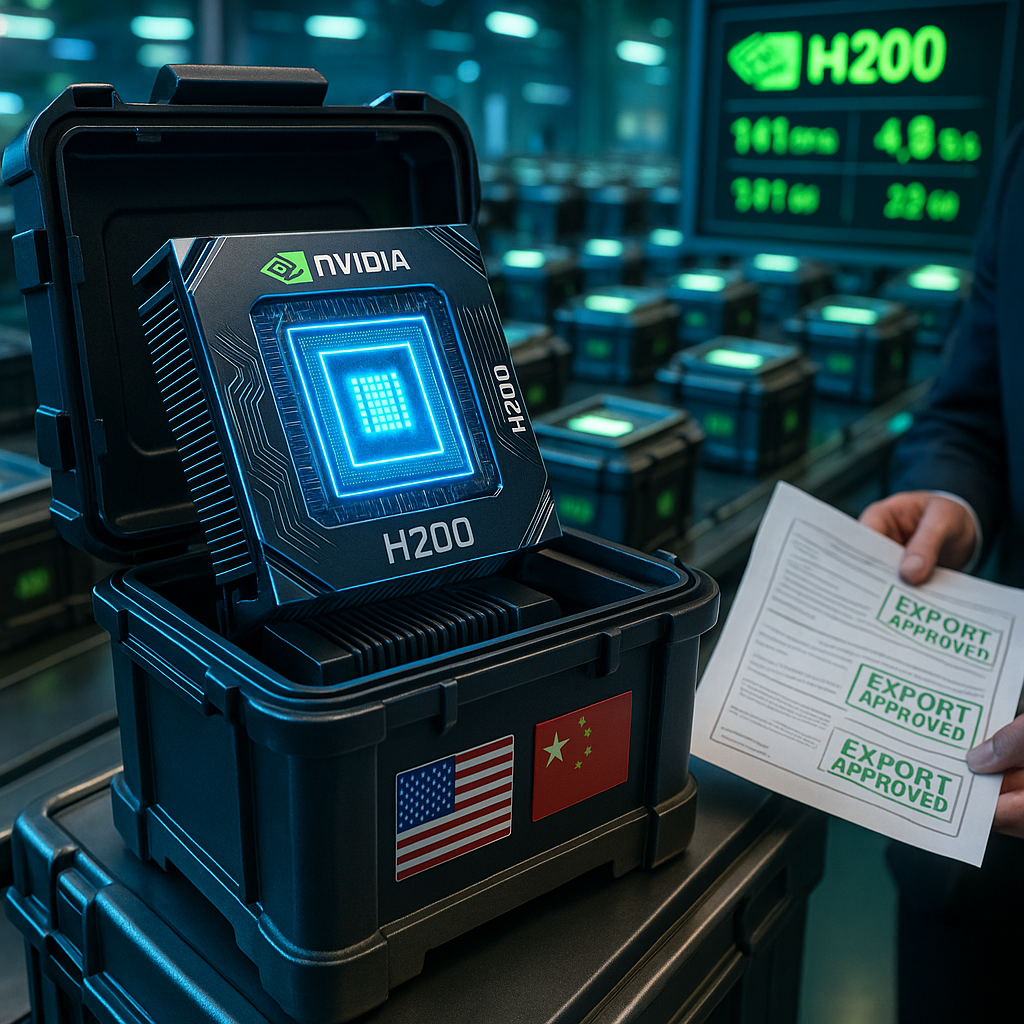
- Trump approves Nvidia chip exports: The decision permits Nvidia to export its latest H200 AI graphics processing units to Chinese buyers, reversing earlier restrictions.
- Advanced AI technology accessible in China: Nvidia’s H200 chips support faster machine learning and data analysis, strengthening China’s AI research capabilities.
- Shift in US-China tech policy: The export approval could ease trade tensions and affect future collaboration or competition between the two countries.
- Immediate effects on global AI supply chain: Analysts expect this move to impact market dynamics, benefiting Nvidia and the Chinese tech sector.
- Ongoing regulatory review: The White House has indicated it will monitor and possibly update regulations for future high-tech exports.
Introduction
Former President Donald Trump has approved Nvidia’s export of its advanced H200 AI chips to China, reversing previous restrictions and suggesting a possible easing of US-China technology tensions. Announced on Tuesday, this policy change gives Chinese companies access to advanced AI hardware. That could influence innovation, global trade, and the competitive artificial intelligence landscape.
What Trump’s Decision Means for Nvidia and China
Trump’s approval allows Nvidia to export its advanced H200 AI chips to China, undoing previous restrictions on high-performance computing hardware. This change grants Chinese firms the ability to buy Nvidia’s newest AI processors, which were previously under tight export controls.
Analysts view this as the first major easing of semiconductor export restrictions since October 2022. These H200 chips, designed specifically for AI, offer significant improvements over earlier generations that were already restricted from entering the Chinese market.
The chips are key to developing and operating large language models and other advanced AI systems. Market experts suggest this decision could bring billions in additional revenue for Nvidia, reinforcing its position as a global leader in AI hardware.
Un passo avanti. Sempre.
Unisciti al nostro canale Telegram per ricevere
aggiornamenti mirati, notizie selezionate e contenuti che fanno davvero la differenza.
Zero distrazioni, solo ciò che conta.
 Entra nel Canale
Technical Specifications and Importance
Nvidia’s H200 chips rank among the most advanced AI processors in the world. They offer substantial gains in memory bandwidth and computational power. That’s essential for the demanding workloads of modern artificial intelligence systems.
Featuring High Bandwidth Memory (HBM3e), these chips provide up to 4.8 terabytes per second of memory bandwidth, making them roughly 1.8 times faster than their predecessors for AI tasks. This capability is crucial for training and running sophisticated AI models.
For Chinese tech companies, access to H200 chips could significantly speed up research in natural language processing, computer vision, and other areas. Before this decision, Chinese organizations relied on less powerful solutions or pursued domestic alternatives.
The technical gap between restricted and unrestricted chips was cited as a major barrier. Experts estimated it set back Chinese AI development by one to two years.
Political Context and Reactions
The decision has drawn a range of responses from government officials and policy experts.
Balancing innovation needs with national security
The Commerce Department described the move as “balancing innovation needs with national security considerations,” while some lawmakers voiced concerns about potential security risks.
A senior administration official emphasized that the change represents a recalibration of technology competition, not a total policy reversal. Certain end-use safeguards would remain in place.
Technology industry leaders responded positively, citing increased predictability for global technology development and trade. Silicon Valley executives have advocated for export policies that help American firms stay competitive.
Among cybersecurity and defense experts, opinions remain divided. Some warn the move could strengthen China’s AI capabilities. Others believe previous export controls had only limited effectiveness in slowing technology transfer.
Market Impact and Industry Implications
Nvidia’s stock climbed 4.2% after news of the export approval, reflecting investor confidence in expanded market opportunities. Analysts estimate the decision could add $3-5 billion in annual revenue for Nvidia from Chinese buyers.
Industry observers predict this will further solidify Nvidia’s status as the global leader in AI chips. Other companies with AI-focused hardware also experienced gains in the market.
Renewed competition for Chinese chipmakers
The policy shift poses new challenges for Chinese domestic chipmakers, such as Huawei, which had ramped up development in response to earlier restrictions. Now, these firms face renewed competition from Nvidia’s latest technology.
For the wider AI industry, giving Chinese tech companies access to state-of-the-art hardware could reset aspects of global competition. Leading firms like Baidu, Alibaba, and Tencent may speed up their AI research and deployment, narrowing the gap with American counterparts.
Un passo avanti. Sempre.
Unisciti al nostro canale Telegram per ricevere
aggiornamenti mirati, notizie selezionate e contenuti che fanno davvero la differenza.
Zero distrazioni, solo ciò che conta.
Entra nel Canale
International Response and Strategic Considerations
Allied countries have reacted in various ways to the export approval. Some European officials have announced plans to reevaluate their own export controls. An EU technology commissioner highlighted the need for coordinated approaches to technology regulation.
Japan and South Korea, important centers for semiconductor manufacturing, have sought discussions with US officials to better understand the implications of the policy change. These countries have generally maintained export controls aligned with US policy.
The decision marks a strategic shift in the US approach to advanced technology and its role in competition with China. While previous policies focused on restricting technology access, this move signals an effort to keep US firms at the forefront of innovation and market share.
coordinated approaches to technology regulation
Experts in international relations suggest this shift may affect future US-China negotiations on technology-related issues, such as data flows, investment screening, and joint work on climate or AI safety standards.
Conclusion
Trump’s approval of Nvidia’s H200 AI chip exports signals a pivotal change in US-China technology policy. It grants Chinese companies access to advanced processors and impacts global AI competition. The move brings greater scrutiny of export controls by industry and governments worldwide. What to watch now: possible regulatory responses from allied nations and forthcoming guidance from US authorities on policy implementation.


Leave a Reply