

Key Takeaways
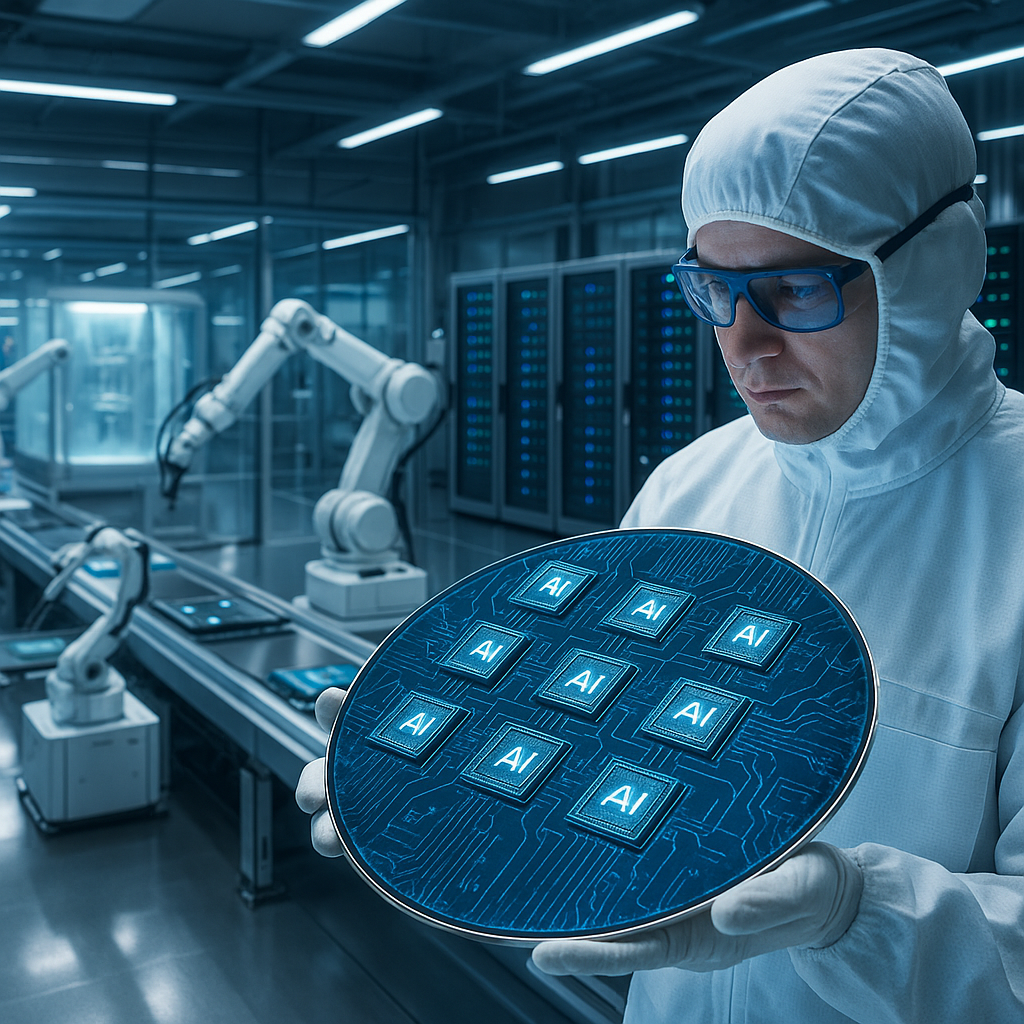
- Top story: TSMC reports revenue growth, driven by strong demand for AI chips and continued sector investment.
- NVIDIA introduces its next-generation gaming AI, claiming up to six times faster frame generation and improved performance.
- Samsung unveils a tri-fold phone prototype at CES, signaling advancements in foldable display technology.
- AMD launches Ryzen AI 400 chips, bringing advanced AI processing directly to consumer devices.
- The rapid adoption of AI-driven features positions 2026 as a pivotal year in the technology sector.
Introduction
TSMC’s latest revenue report reveals increasing demand for AI chips, underscoring AI’s growing influence in shaping tech news in 2026. As major industry players such as NVIDIA launch advanced gaming AI and others push forward in mobile and on-device intelligence, recent events reflect rapid innovation across the technology landscape.
Top Story: TSMC Reports Strong Q4 Revenue Growth
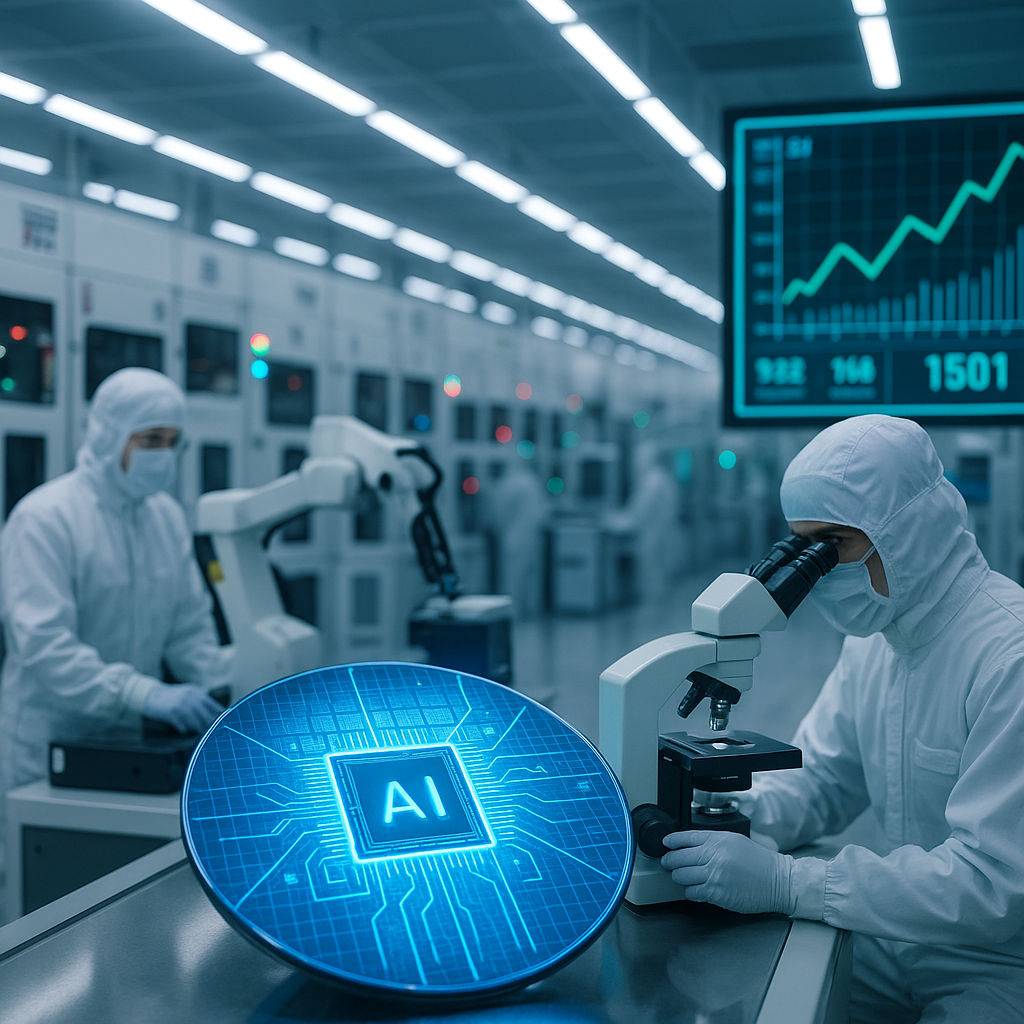
Taiwan Semiconductor Manufacturing Company reported fourth-quarter revenue of $25.4 billion, surpassing analyst expectations by 7 percent. The company attributed this growth primarily to rising demand for advanced AI processors, especially those used in data centers and AI infrastructure.
TSMC executives stated that expanded orders from both NVIDIA and AMD for next-generation AI chips contributed to these results. C.C. Wei, TSMC CEO, explained that the ongoing AI computing revolution continues to drive unprecedented demand for the company’s most advanced nodes.
This performance further solidifies TSMC’s central role in the global AI supply chain, as companies invest in infrastructure for AI applications. Industry analysts point out that TSMC’s advanced manufacturing capabilities are increasingly crucial for the expansion of AI adoption worldwide.
Un passo avanti. Sempre.
Unisciti al nostro canale Telegram per ricevere
aggiornamenti mirati, notizie selezionate e contenuti che fanno davvero la differenza.
Zero distrazioni, solo ciò che conta.
 Entra nel Canale
Also Today: Consumer Tech
CES 2026 Highlights New AI-Embedded Devices
The Consumer Electronics Show in Las Vegas featured the debut of a new generation of devices with embedded AI able to operate without cloud connections. Samsung and LG presented home appliances equipped with neural processing units, facilitating complex tasks locally and reducing privacy concerns and latency.
Several smartphone manufacturers revealed models containing dedicated AI chips, supporting on-device functions for photography, translation, and health monitoring. These developments illustrate a significant move toward practical AI integration in everyday products.
Automotive displays were prominent, featuring vehicles equipped with AI-powered driving assistants and immersive entertainment systems. Experts at CES noted that such innovations represent the merging of AI with physical infrastructure, which requires substantial semiconductor resources.
Microsoft Expands Copilot Integration Across Physical Devices
Microsoft announced an expansion of its Copilot AI assistant into dedicated hardware, partnering with Dell, HP, and Lenovo to create “Copilot-optimized” devices with specialized AI processing units.
These new devices, including desktops, laptops, and tablets, are specifically designed for AI workloads. Satya Nadella, Microsoft CEO, stated that the company aims to bring AI capabilities into everyday computing devices.
Demonstrations highlighted Copilot handling complex creative tasks entirely on-device, reflecting a shift toward locally processed AI functions. The first products will begin shipping to enterprise customers in March 2026.
Also Today: Enterprise Tech
IBM Launches Quantum Computing Service for Business Applications
IBM introduced its commercial quantum computing service for enterprise customers in sectors such as pharmaceuticals, materials science, and financial modeling. The service gives clients access to IBM’s 1,000-qubit quantum processor through a cloud platform designed for business needs.
Early adopters include Pfizer, applying the technology to drug discovery, and JPMorgan Chase, using it for risk assessment models. This marks one of the first practical deployments of quantum computing for commercial purposes.
IBM executives highlighted the significant infrastructure investment needed to make quantum computing available commercially. Dr. Dario Gil, IBM’s Senior Vice President and Director of Research, emphasized the importance of not only theoretical progress but also the development of large-scale physical systems, including cryogenic cooling and control electronics.
Cloud Providers Announce Massive Infrastructure Expansion
Amazon Web Services, Microsoft Azure, and Google Cloud announced large-scale infrastructure investments focused on AI computing capabilities. The three companies will jointly invest more than $75 billion over the next two years in data center expansion tailored to AI workloads.
AWS outlined plans for eight new regions dedicated to generative AI applications, featuring custom cooling systems to manage the heat produced by AI processors. Adam Selipsky, AWS CEO, stated that the AI revolution presents both software and physical infrastructure challenges.
This wave of investment highlights the heavy material requirements of AI technology, which demand significant resources such as power, cooling, and specialized semiconductors. Observers note that industry focus is shifting from purely software to a broader understanding of AI as a physical infrastructure challenge.
What to Watch
- TSMC’s full earnings call scheduled for 12 January 2026, where executives will provide Q1 guidance and detail capacity expansion plans.
- Microsoft’s AI Hardware Summit on 15 January 2026, expected to introduce the complete Copilot-optimized device line.
- IBM Quantum Business Conference on 20 January 2026, featuring case studies from early enterprise users.
- Google’s annual Cloud Next conference beginning 25 January 2026, where new AI infrastructure services are set to be announced.
- Apple has not officially confirmed the date for its AI-focused product event, though industry sources suggest 28 January 2026.
Conclusion
TSMC’s revenue growth highlights rising demand for AI chips driving both enterprise and consumer advancements in tech news for 2026. Developments at CES, in quantum computing, and with AI infrastructure signal the sector’s increasing emphasis on physical systems and local processing. What to watch: Key updates from TSMC’s earnings call on 12 January, Microsoft’s hardware showcase on 15 January, and major industry conferences throughout the month. Explore further innovations in quantum computing, discover the impact of IoT trends on connected infrastructure, and see how AI and automation are transforming manufacturing standards for the future.


Leave a Reply