

Key Takeaways
Grasping the differences between antivirus and VPN solutions is fundamental for anyone who values device protection and online privacy. As cybersecurity products increasingly converge into unified security suites, understanding the distinct and overlapping features of these tools is key to building a robust digital defense.
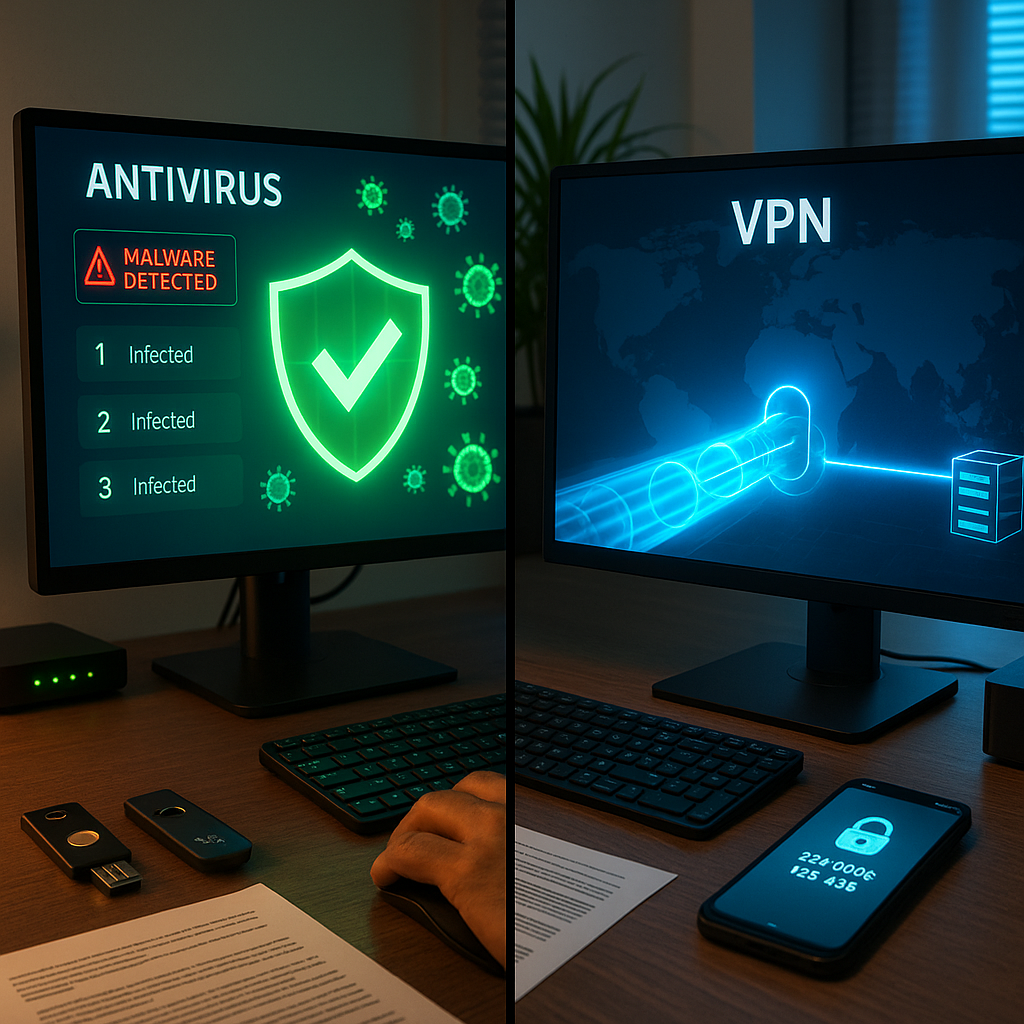
- Antivirus shields against malware and device threats: Antivirus software specializes in detecting, blocking, and removing harmful programs such as viruses, ransomware, spyware, and trojans. This provides essential protection against both well-known and emerging cyber threats targeting your devices.
- VPNs safeguard your online privacy and anonymity: A VPN encrypts your internet connection and hides your IP address, making it much harder for ISPs, hackers, advertisers, or cybercriminals to monitor your online activities or glean your physical location, even when using public Wi-Fi.
- No single solution covers every risk: While antivirus software excels at fighting malware, it does not conceal your internet traffic or protect your data as it moves across networks. Conversely, a VPN secures your connection but cannot scan for malicious software or prevent local infections. Using just one exposes critical gaps in your digital defenses.
- Integrated security suites blur the boundaries: Many providers now offer bundles that combine VPN and antivirus features. However, these packages sometimes make compromises on privacy levels or malware detection accuracy. Users should carefully evaluate features and independent reviews before relying solely on “all-in-one” options.
- Dual protection maximizes safety and adaptability: Employing both dedicated antivirus and VPN tools delivers powerful, overlapping protection. You benefit from real-time malware scanning while also browsing privately and securely, which is especially important for activities like online banking, shopping, remote work, or even managing healthcare or legal records online.
- Layered cybersecurity delivers genuine peace of mind: While investing in both solutions may require a higher budget, the additional security significantly reduces your risk of cyberattacks, identity theft, fraud, and financial or personal data breaches.
By understanding where these technologies complement or differ, you can create a cyber defense tailored to your individual or professional needs. This article will explore how antivirus and VPN solutions work, their unique and shared advantages, and how combining them delivers optimal protection for today’s connected world.
Introduction
Cyberthreats rarely need to overtake your entire system. They thrive on finding overlooked vulnerabilities. That is why knowing the vital differences between antivirus and VPN tools is essential for anyone intent on securing personal devices and preserving online privacy. Both are pillars of modern cybersecurity, yet each provides unique protection against an ever-evolving spectrum of threats.
Antivirus software defends your device from malicious programs, acting as a frontline shield against viruses, ransomware, and other cyberattacks. Meanwhile, a VPN cloaks your internet activities, keeping your browsing private and your data transmissions secure, even in public or on untrusted networks. If you rely solely on one without the other, hidden vulnerabilities could expose your private information, financial assets, or professional data.
Un passo avanti. Sempre.
Unisciti al nostro canale Telegram per ricevere
aggiornamenti mirati, notizie selezionate e contenuti che fanno davvero la differenza.
Zero distrazioni, solo ciò che conta.
 Entra nel Canale
To build an effective digital security posture, it is crucial to understand how antivirus and VPN solutions work together, where their strengths and limitations lie, and why integrating both may represent the smartest strategy for safeguarding your digital life. Whether you’re protecting your home computer, business systems, or even your classroom technology, this balance really matters.
Understanding Antivirus Software
Core Functions of Antivirus Protection
Antivirus software is your primary defense against malicious code, unauthorized access attempts, and a broad range of digital threats. It’s designed not only to detect and remove malware, but to actively monitor for suspicious activities that could indicate a breach or vulnerability. Modern antivirus tools employ a variety of detection strategies, including:
- Signature-based detection: Matches files and programs against an up-to-date database of known malware.
- Heuristic analysis: Identifies potentially dangerous behavior or modified code that may signal a new or unknown threat.
- Real-time protection: Actively monitors system processes, blocking threats as soon as they attempt to execute.
- Automated updates: Keeps malware definitions and security protocols current, ensuring the software can counter emerging risks as hackers adapt their tactics.
Today’s antivirus solutions often extend far beyond basic virus detection. Many include features such as:
- Ransomware shields
- Spyware/Adware removal
- Phishing and email threat scanning
- Safe browsing modules for blocking malicious links
- Password managers and parental controls
Real-world examples of antivirus in action include:
- Healthcare: Protecting electronic health records from ransomware attacks in hospitals
- Finance: Securing ATMs and banking terminals from credential-stealing malware
- Education: Defending school systems from malicious attachments or e-learning platform exploits
free antivirus apps can be a practical choice for certain users, but always evaluate the level of protection needed for your environment.
What Antivirus Can’t Do
Despite its advanced capabilities, antivirus software does not provide a complete security umbrella. It cannot:
- Encrypt your data during transmission or conceal your IP address and browsing location
- Prevent ISPs, government agencies, or advertisers from tracking your online activities
- Evade geo-blocking or censorship enforced by certain content providers or governments
- Secure your connection when using public or unsecured Wi-Fi networks
- Bypass sophisticated network-level attacks such as eavesdropping or man-in-the-middle exploits
For industries like legal services or remote work environments, where confidential data must remain private as it moves between devices and networks, these gaps underscore the need for additional security solutions like VPNs.
Understanding VPN Technology
Core Functions of VPN Protection
Virtual Private Networks (VPNs) are designed to create a private, encrypted space for your online activities. Rather than defending against malicious files, their mission is to keep your digital footprint invisible and your information safe in transit. The essential roles of a VPN include:
- Encryption: Protects your information by scrambling data, ensuring only the intended recipient can read it.
- IP masking: Substitutes your real IP address with one from the VPN provider, shielding your location and identity.
- Traffic routing: Sends your internet traffic through secure servers, bypassing local monitoring or restrictions.
- Access control: Allows secure remote access to private networks. This is critical for remote workers and businesses managing sensitive data.
VPN technology proves invaluable for:
- Healthcare professionals connecting to hospital networks from remote clinics
- Financial advisors managing confidential transactions over public Wi-Fi
- Teachers and students accessing school resources securely from home
- Retailers handling customer transactions while traveling between store locations
If you’re interested in learning how to set up a VPN and maximize privacy, see our step-by-step VPN setup guide.
What VPNs Can’t Do
VPNs are not designed to address every cyberthreat. They cannot:
- Detect, quarantine, or remove malware already present on your device
- Identify or block phishing attacks masquerading as legitimate emails or websites
- Prevent malicious files from being downloaded
- Provide device-level protection against keyloggers, screen capture tools, or rootkits
For example, a VPN will mask your traffic at a coffee shop’s public Wi-Fi, but if you accidentally download an infected attachment or click a phishing link, it cannot prevent the resulting malware from compromising your device.
Key Differences Between Antivirus and VPN
Protection Focus
Antivirus and VPN solutions serve different (though connected) areas of cybersecurity:
Antivirus Software:
- Primarily safeguards the device itself
- Protects against malware, spyware, rootkits, and ransomware
- Monitors file integrity and system operations for unauthorized changes
- Offers granular control and real-time scanning
VPN Service:
- Shields the integrity and privacy of your internet connections
- Encrypts data as it moves between your device and the web or private networks
- Hides your IP address, helping prevent network-level tracking, profiling, or censorship
- Enables secure access to corporate or educational resources remotely
Use Case Scenarios
Different environments and activities highlight the strengths of each solution:
Un passo avanti. Sempre.
Unisciti al nostro canale Telegram per ricevere
aggiornamenti mirati, notizie selezionate e contenuti che fanno davvero la differenza.
Zero distrazioni, solo ciò che conta.
Entra nel Canale
- Banking and Financial Transactions
- Antivirus: Shields accounts from password-stealing trojans or fake banking apps
- VPN: Encrypts credit card numbers and financial data sent over the internet
- Remote or Hybrid Work
- Antivirus: Blocks ransomware, spyware, or malware on business laptops or shared devices
- VPN: Provides encrypted access to sensitive work files from home or while traveling
- Public Wi-Fi and Travel
- Antivirus: Stymies drive-by downloads from compromised hotspots
- VPN: Prevents eavesdroppers from intercepting login credentials at airports, cafes, or hotels
- Education and E-Learning
- Antivirus: Protects students’ and educators’ devices from infected downloads or attachments
- VPN: Allows secure access to digital classrooms, research databases, and geo-blocked educational resources
- Retail and E-commerce
- Antivirus: Guards point-of-sale systems from malware and spyware
- VPN: Enables secure connections for mobile sales teams and protects customer transactions remotely
Why You Might Need Both
Complementary Protection
Harnessing both antivirus software and a VPN creates a powerful cybersecurity framework. This addresses threats at both the device and network levels:
Device Security:
- Antivirus detects and neutralizes local threats
- VPN secures internet traffic and blocks unwanted surveillance
- Layering both ensures your device and your data in motion remain safe
Data Protection:
- Antivirus prevents confidential files from being stolen or corrupted by malware
- VPN encrypts sensitive communications and shields credentials during online transactions
- This dual approach is critical in sectors like healthcare, finance, and legal services, where both privacy and integrity of data are paramount
Adaptability:
- With each protecting against different risks, this approach adapts smoothly to varied environments (whether you’re at home, traveling, or working remotely)
If you want to reinforce your daily online security habits, check out the Cyber Hygiene Checklist for practical tips.
Modern Security Considerations
New workstyles, regulations, and threat vectors require a more nuanced defense:
- Evolving Cyberthreats
- Cybercriminals increasingly blend attack strategies targeting both device vulnerabilities and unsecured communications
- Combining antivirus, VPN, and other layered solutions blocks multiple attack vectors and greatly reduces your overall risk
- Remote Work and BYOD Environments
- Employees often switch between secure work networks, public Wi-Fi, and home internet, each with its own vulnerabilities
- Comprehensive security is non-negotiable for protecting both organizational and personal data
- Privacy, Compliance, and Regulatory Demands
- Consumer awareness about digital rights is rising, coupled with new privacy laws for education, finance, and healthcare
- Ensuring protection against both known threats (malware) and stealth risks (surveillance, data harvesting) is now a business imperative
- Sensitive Transactions and High-Value Data
- Whether handling financial data, proprietary legal documents, or client medical records, the combined shielding of antivirus and VPN solutions mitigates the risk of reputational or financial damage
Choosing the Right Solutions
Evaluating Your Needs
Selecting an effective cybersecurity setup requires careful assessment of your habits, environment, and priorities:
Usage Patterns:
- How often you use public Wi-Fi for work, travel, or leisure
- The nature and volume of sensitive or confidential data you handle
- Online and app-based activities (shopping, research, file sharing, remote meetings)
- Whether you or your team connect to networks from multiple locations
Industry & Risk Landscape:
- Are you exposed to industry-specific cyberthreats (e.g., healthcare data, legal communications, educational records)?
- Do regulatory requirements necessitate specific security standards?
- Are you working in regions with heightened cybersecurity risks or government surveillance?
For more about keeping your accounts and devices secure across locations and situations, see how to set up multi-factor authentication.
Personal Preferences and Comfort Level:
- How much privacy do you want when browsing?
- Are you responsible for others’ data (e.g., clients, students, patients)?
Cost-Benefit Analysis
When deciding between standalone tools or integrated suites, weigh these considerations:
- Standalone vs. Integrated Security Suites
- Bundled products may offer convenience, but verify their detection and encryption levels against leading standalone solutions
- Consider compatibility with your devices (Windows, macOS, Android, iOS, Linux)
- Assess the flexibility to upgrade or replace one element without disrupting the other
- Performance and Compatibility
- Evaluate resource demand. Will the software slow down your system, affect bandwidth, or drain battery on mobile devices?
- Confirm ease of installation, daily management, and user support
- Ongoing Support and Upgrades
- Look for security solutions with frequent updates to address emerging threats
- Prioritize vendors with a proven track record, responsive customer service, and active user communities
- Transparency and Trustworthiness
- Research data handling practices. Does your antivirus or VPN provider log activity or sell user data?
- Opt for solutions endorsed by independent security experts, with clear privacy policies
For additional plain-language comparison of security approaches for files and storage, you may be interested in our guide: Cloud vs Local Storage Explained.
Conclusion
Effectively navigating today’s digital world means recognizing that antivirus software and VPNs serve distinctive, yet equally essential, roles in your cybersecurity arsenal. Antivirus wards off malware and destructive software, preserving the health of your devices and the integrity of your files. VPNs, on the other hand, create a private, secure channel for your internet activity and keep your personal data safe from prying eyes, whether you’re at home, at work, or using public Wi-Fi.
Relying on only one solution leaves substantial weaknesses. Antivirus cannot hide your digital identity or protect your online activity as it travels across the web. VPNs, powerful as they are for privacy, cannot detect or neutralize harmful software lurking within your downloads or email.
As cyber threats evolve and privacy demands intensify, the most resilient defense is a layered one. Integrating both antivirus and VPN tools tailored to your lifestyle and risk profile enables you to proactively address threats at every stage, from safeguarding personal data and work communications to ensuring safe online shopping or banking.
Looking forward, businesses and individuals who adopt a strategic, multifaceted security approach will be equipped to meet tomorrow’s challenges. The future of digital resilience belongs to those who not only adapt to change, but anticipate and outpace it. By staying informed and choosing the right mix of privacy and security solutions, you empower yourself to explore, work, and connect online with greater confidence, safety, and peace of mind.
TechSensei’s goal is to guide you through these choices with clarity, trustworthiness, and actionable insight, making advanced cybersecurity both accessible and effective for everyone. The right balance of antivirus and VPN technology isn’t just about protection. It’s about empowering you to engage fully with the digital world, secure in the knowledge your privacy and wellbeing are in good hands.




Leave a Reply