
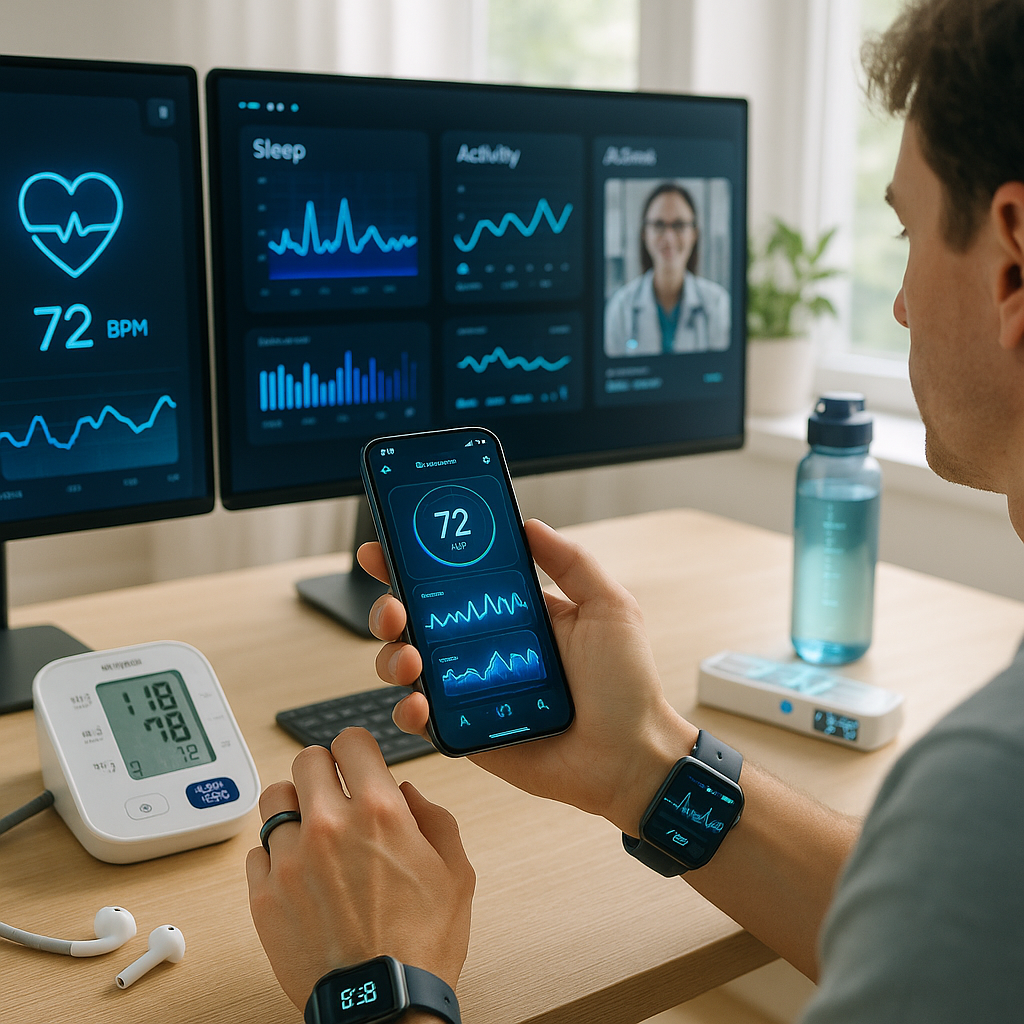

Key Takeaways
- Continuous health insights fuel proactive lifestyles: Wearable devices now provide around-the-clock data on activity, sleep, heart rate, and more. This immediate feedback empowers users to make smarter and faster health decisions every day, promoting proactive wellness.
- Diversity and personalization redefine wearable tech: Today’s wearables extend far beyond basic fitness tracking. From ECG monitoring and blood oxygen measurement to stress analysis and menstrual health tracking, users can now select devices that address unique personal health needs.
- Integration bridges consumers and healthcare systems: Wearables seamlessly sync with health apps, electronic medical records, and even healthcare providers. This enables remote monitoring, early detection of health issues, and tailored care plans—all accessible from your wrist or pocket.
- Digital tools transform chronic condition management: Fitness trackers and health apps equipped with features like medication reminders, glucose monitoring, and custom alerts help users with diabetes, heart disease, and other conditions manage key metrics and maintain daily routines. This makes chronic care more accessible and less isolating.
- Robust privacy safeguards earn user trust: As devices collect deeply personal health data, advanced security measures and transparent privacy controls are essential for protecting sensitive information. Trust is built through strong safeguards and clear user consent protocols.
- Empowered individuals reshape healthcare responsibilities: The real shift is not just technological but behavioral. Wearables motivate users to become active participants in managing their wellbeing, yielding more autonomy and reducing dependence on traditional healthcare systems.
Wearable technology is truly changing the way people engage with their health, making wellness more accessible, engaging, and effective than ever before. To dive deeper, let’s examine the diverse range of device types, the underlying science behind health data, and strategies for leveraging these digital companions to their fullest potential.
Introduction
A quick glance at your wrist can now reveal more about your health than a traditional checkup once could. Wearable tech and health apps have evolved from clever gadgets to essential health partners, influencing the way we approach fitness, wellness, and our interactions with healthcare providers.
By delivering real-time data on everything from heart rates to sleep cycles, these digital devices empower users to take control of their health journeys. Modern wearables move beyond the simplicity of step tracking. They now offer actionable insights for personalized fitness, chronic condition support, and seamless connections between everyday habits and professional care.
Understanding how these innovations put your health firmly in your hands requires a closer look at their rapid evolution and expanding capabilities. Let’s explore how wearable technology supports your journey toward better health, one step, heartbeat, and data point at a time.
Un passo avanti. Sempre.
Unisciti al nostro canale Telegram per ricevere
aggiornamenti mirati, notizie selezionate e contenuti che fanno davvero la differenza.
Zero distrazioni, solo ciò che conta.
 Entra nel Canale
The Evolution of Fitness Technology
From Simple Pedometers to Advanced Smart Wearables
Fitness technology has experienced a striking transformation. The earliest pedometers offered only basic step counts. But today’s wearables are sophisticated health companions equipped with multi-sensor platforms. Devices like the Apple Watch Series 8 can detect falls, measure blood oxygen levels, and even perform ECG readings. These are functions previously exclusive to specialized medical equipment.
Brands like Fitbit and Garmin have led the innovation charge, enhancing battery life, sensor precision, and usability. The Fitbit Sense 2, for instance, now offers stress tracking through electrodermal activity sensing. Garmin’s Enduro range caters to endurance athletes with features like solar charging and advanced recovery analytics. These advances have broadened wearables’ appeal far beyond step counting, turning them into holistic lifestyle devices.
Harnessing AI and Machine Learning
Artificial intelligence (AI) and machine learning have revolutionized what wearables can achieve. Raw sensor data is transformed into meaningful, actionable insights. Smart algorithms detect abnormal heart rhythms, predict potential health issues, and suggest tailored workout routines. Devices like the Whoop 4.0 use sophisticated AI to analyze recovery and optimize athletic performance by determining ideal training loads.
This learning capability empowers wearables to adapt their recommendations based on individual patterns. The Samsung Galaxy Watch 5 Pro, for example, uses machine learning to monitor sleep, deliver personalized sleep coaching, and refine recommendations as it learns from user behavior.
The technology’s impact extends beyond fitness. In healthcare, such intelligent analysis helps clinicians monitor patient recovery from surgeries or detect early signs of complications, demonstrating the broad relevance of AI-powered insights.
Health Monitoring Capabilities
Access to Real-Time Health Metrics
Today’s wearables unlock access to a variety of vital health indicators in real time. Users can monitor:
- Continuous heart rate tracking with zone-specific feedback for exercise and rest
- Blood oxygen saturation (SpO2) for respiratory and cardiovascular health awareness
- Stress levels using heart rate variability and other biometrics
- Detailed sleep analytics (REM, deep, and light sleep stages)
Wearable accuracy is steadily improving. Devices such as the Oura Ring Gen 3 have achieved over 90% correlation with clinical-grade sleep studies. The Apple Watch’s ECG function has received FDA clearance for atrial fibrillation detection, marking a new era of consumer-grade health monitoring.
Proactive and Preventative Health Features
Wearables now offer more than monitoring. They’re powerful tools for early warning and prevention. Features like fall detection and abnormal heart rhythm notifications have already saved lives, alerting users and medical professionals to issues before they escalate.
Fitbit’s stress management suite helps users identify high-stress periods and manage them proactively through tailored recommendations. During public health crises like the COVID-19 pandemic, some devices flagged potential infections early by detecting unexpected spikes in heart rate or skin temperature.
Outside of fitness and wellness, such preventative capabilities are impacting fields like elder care, enabling real-time alerts for falls or sudden changes in health status, and supporting remote patient monitoring in rural and underserved communities.
The App Integration Revolution
Expanding Ecosystems of Health Apps
Wearables achieve their true potential when connected to powerful health apps. Platforms like MyFitnessPal, Strava, and Nike Training Club provide a holistic experience through:
- Comprehensive workout tracking and personalized plans
- In-depth nutrition guidance and food logging
- Social and community engagement with peers
- Gamification via achievement systems and challenges
Such connected ecosystems drive real behavior change. Studies show users who participate in these communities and leverage app synergies are 32% more likely to sustain wellness habits long-term compared to those who use devices in isolation.
Beyond fitness, medical apps help users with chronic conditions share data with caregivers, automate medication reminders, and access telehealth consultations, all from their wearable or mobile device.
Seamless Data Synchronization and Analysis
Health platforms now excel at aggregating diverse streams of data. For instance, Google Fit combines information from various devices and apps, enabling:
- Cross-platform compatibility for a seamless user experience
- Unified dashboards that reveal broader trends and patterns in health
- Adaptive goal tracking based on evolving user needs and results
- Automatic report generation for sharing insights with healthcare providers
This data centralization is invaluable in clinical environments. Hospitals, clinics, and researchers increasingly rely on synchronized health data for remote patient monitoring, epidemiological studies, and personalized care plans. This ensures that technology benefits both individual and population health.
Impact on Personal Health Management
Driving Lasting Behavioral Change and Motivation
Wearables have become powerful motivators for healthier living. Integrating gamification elements such as Apple’s Activity Rings and Fitbit’s badge system taps into core psychological drivers, making fitness routines both fun and rewarding. Research indicates that fitness tracker users walk, on average, 2,000 more steps daily than those without devices.
Un passo avanti. Sempre.
Unisciti al nostro canale Telegram per ricevere
aggiornamenti mirati, notizie selezionate e contenuti che fanno davvero la differenza.
Zero distrazioni, solo ciò che conta.
Entra nel Canale
Social and competitive features also boost engagement. Garmin users, for instance, can participate in worldwide group challenges, share milestones, and get encouragement. All key to building accountability and sustained motivation.
These behavioral insights are influencing other industries as well. In education, for example, wearables are used to monitor alertness and engagement. In corporate wellness programs, fitness challenges foster teamwork and improve employee health outcomes.
Deepening Healthcare Integration
The partnership between wearable technology and healthcare providers is redefining patient care. Doctors are increasingly accepting wearable data to:
- Remotely monitor chronic conditions like hypertension, sleep apnea, and arrhythmias
- Assess and support medication compliance through custom reminders
- Identify changes in health metrics that could signal the need for intervention
- Encourage preventative medicine and early intervention
Healthcare institutions, such as the Mayo Clinic, have integrated wearable data into patient care protocols. This has led to improvements like a 20% increase in early interventions for cardiac patients. In pediatrics, wearable devices are being used to monitor physical activity and sleep in children managing obesity or ADHD, facilitating data-driven adjustments to care plans.
Other industries are seeing parallel benefits. Insurance providers use wearable data for proactive risk assessment and incentives. Sports organizations leverage real-time analytics for injury prevention and performance optimization.
Privacy, Security, and Ethical Considerations
Earning Trust Through Safeguards
As wearables collect sensitive health and behavioral data, robust privacy protections are paramount. Transparency about how data is used, user-friendly consent settings, and advanced security protocols help maintain trust between technology providers and consumers.
For example, leading devices now feature on-device data encryption, multi-factor authentication, and user control over data sharing. Regulatory compliance, such as HIPAA in the U.S. and GDPR in Europe, guides ethical handling of health information.
Organizations in sectors like finance and legal are adopting similar standards, recognizing that trust is foundational when dealing with any personal or confidential data.
The Role of Informed Consent and Control
Empowerment is built on informed consent. Wearable users must have clear options for controlling what data is collected, how it is used, and who can access it. Tech companies are introducing privacy dashboards, granular permission controls, and transparent reporting to put users in the driver’s seat of their digital health journey.
This ethos is extending to consumer technology more broadly, reinforcing a standard of ethical innovation across industries.
Conclusion
The rapid evolution of wearable technology and health apps has forever altered how individuals manage their wellbeing. From simple pedometers to advanced AI-driven health platforms, today’s devices offer real-time insights, predictive analysis, and seamless integration with both consumer and clinical environments. Greater personalization and the ability to proactively manage health, across fitness, chronic conditions, and preventative care, are becoming accessible to a wide range of users.
As wearable technology further converges with digital health and other sectors, organizations and individuals must anticipate and adapt to an era where data-driven decision-making, user empowerment, and privacy by design are no longer optional. They’re essential. Forward-looking individuals and businesses that embrace these changes will set the standard for success as healthcare, technology, and daily life become increasingly interconnected.
The ultimate question is not when you’ll adopt these digital health advancements, but how effectively you will harness their full potential. The future of health is in your hands. Driven by informed choices, empowered participation, and a commitment to using technology for lasting wellbeing.




Leave a Reply