

Key Takeaways
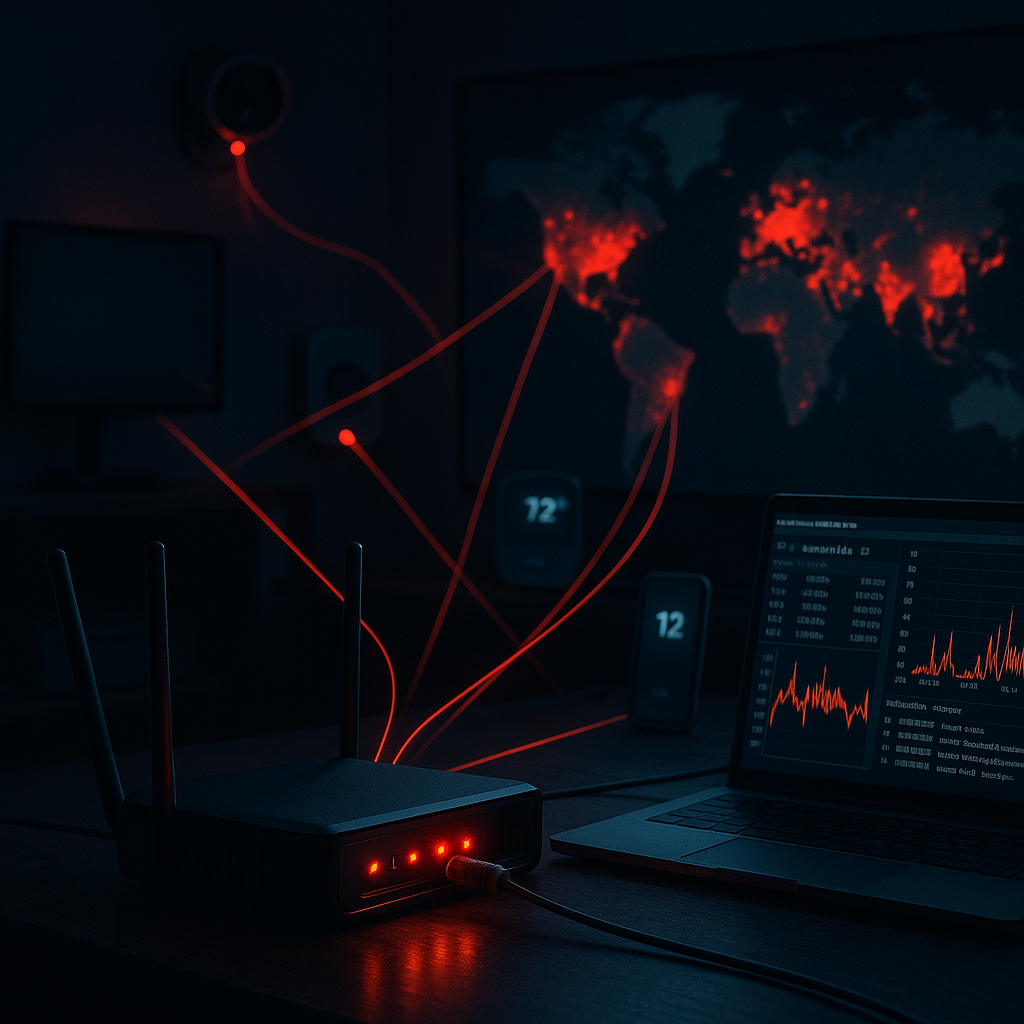
- Kimwolf botnet infects 1.8 million devices: Cybersecurity experts report a significant surge in compromised systems linked to Kimwolf, which targets poorly secured routers and IoT products.
- Global spike in DDoS attacks tied to Kimwolf: Victims across North America, Europe, and Asia face website outages and service disruptions spanning multiple sectors.
- Main infection vector: outdated router firmware: Devices with outdated firmware or default passwords are most vulnerable to Kimwolf’s exploits.
- Researchers advise urgent device checks: Security firms recommend immediate patching, credential resets, and monitoring for unusual network activity.
- Authorities and industry partners coordinate response: Efforts are underway to track botnet command centers and develop tools to curb further spread.
- More technical details forthcoming: Researchers plan to release detailed findings and user-focused removal guides by week’s end.
Introduction
A newly identified botnet called Kimwolf has hijacked approximately 1.8 million devices worldwide in recent weeks, according to cybersecurity researchers. Rapidly spreading through vulnerable routers and IoT devices, Kimwolf’s surge has raised urgent security concerns for households and businesses. Experts are calling for immediate device checks, firmware updates, and stronger online defenses.
Kimwolf Botnet: Scope and Impact
The Kimwolf botnet has infected around 1.8 million devices globally since its detection three weeks ago. Security researchers from Cloudflare and Checkpoint uncovered the malware, which primarily targets consumer-grade routers and smart devices with default credentials or unpatched vulnerabilities.
North America accounts for 42% of infections, Europe for 31%, and Asia-Pacific for 18%, with cases rising quickly. The botnet has been linked to distributed denial-of-service (DDoS) attacks peaking at 630 Gbps against financial institutions and e-commerce platforms.
Sarah Tanaka, senior threat researcher at Checkpoint, noted that Kimwolf’s modular design allows attackers to add new capabilities without full reinstalls. Encrypted command channels make detection more difficult for network teams.
Un passo avanti. Sempre.
Unisciti al nostro canale Telegram per ricevere
aggiornamenti mirati, notizie selezionate e contenuti che fanno davvero la differenza.
Zero distrazioni, solo ciò che conta.
 Entra nel Canale
Router logs may show attempts to connect to IP addresses in Eastern Europe and Southeast Asia. Organizations facing Kimwolf attacks have reported service disruptions lasting between 40 minutes and six hours. The average recovery time is 2.5 hours, according to data from the Cybersecurity and Infrastructure Security Agency (CISA).
How Kimwolf Works
Kimwolf spreads by scanning for devices with weak passwords or known vulnerabilities in outdated firmware. Once compromised, affected devices download the malware payload from redundant servers.
The malware ensures persistence by altering startup configurations and concealing its processes from standard monitoring tools. Infected devices join a command-and-control (C2) network and may be instructed to participate in attacks or search for additional targets.
Marcus Wei, network security analyst at Palo Alto Networks, said Kimwolf is distinctive for its minimal impact on device resources. Many users may not notice performance issues, allowing infections to remain undetected for extended periods.
Kimwolf’s infrastructure employs a domain generation algorithm that creates new command server addresses daily. This tactic makes it much harder for security teams to block its communication channels.
Signs of Infection and Protecting Your Devices
Common signs of Kimwolf infection include unexplained network activity during inactive periods, unusual DNS queries to random-looking domains, and sporadically slow internet speeds.
Router logs may show attempts to connect to IP addresses in Eastern Europe and Southeast Asia. Elena Gorokhova, cybersecurity advisor at the Internet Security Alliance, pointed out that many consumer devices lack accessible logging, which has contributed to Kimwolf’s rapid spread.
To safeguard against this threat, users are advised to:
- Update all network devices with the latest firmware.
- Replace default passwords with strong, unique credentials.
- Disable remote management interfaces unless necessary.
- Enable automatic updates where possible.
- Segment IoT devices on separate networks if feasible.
Manufacturers such as Netgear, TP-Link, and Linksys have released emergency patches to address vulnerabilities exploited by Kimwolf. Applying these updates should be a top priority, even if devices appear to be operating normally.
If you’re looking for more actionable steps to protect your devices, check out this cyber hygiene checklist for online safety.
Industry and Government Response
CISA has issued a Level 2 (Medium) alert related to Kimwolf, coordinating with international partners on threat intelligence and mitigation strategies. A dedicated working group with representatives from major ISPs and device manufacturers has been set up to accelerate remediation.
Robert Jiang, deputy director of CISA’s Cybersecurity Division, said unprecedented cooperation is underway to contain the threat. Industry participants have increased monitoring at internet exchange points to spot botnet-related traffic.
Major ISPs, including Comcast and Verizon, have implemented temporary filtering to block obvious command and control channels. Both companies confirmed ongoing support and guidance for customers affected by Kimwolf.
For those interested in taking security beyond updates, consider multi-factor authentication as part of your account protection strategy.
The FBI’s Cyber Division has launched an investigation into Kimwolf’s origins. While attribution is pending, an FBI spokesperson said the botnet’s sophistication suggests involvement by an organized criminal group or even potentially state-sponsored actors.
What Happens Next for Affected Users
A coalition of cybersecurity firms will release a free Kimwolf detection and removal tool next week, compatible with major operating systems and network devices. The tool will scan local networks and guide users through the remediation process.
Un passo avanti. Sempre.
Unisciti al nostro canale Telegram per ricevere
aggiornamenti mirati, notizie selezionate e contenuti che fanno davvero la differenza.
Zero distrazioni, solo ciò che conta.
Entra nel Canale
CISA is launching webinars starting Thursday to educate network administrators about Kimwolf detection and prevention. Registration is available through the agency’s website, with sessions designed for a range of technical backgrounds.
Router manufacturers plan to release additional security patches throughout the month as new variants emerge. Users are encouraged to register their devices on the manufacturers’ websites to receive timely update notifications.
For more on the latest threats and how to stay ahead, see our overview of emerging cybersecurity predictions through 2030.
Marcus Wei emphasized that the next 30 days are critical for containing Kimwolf. Progress will depend on user awareness, prompt patching, and coordinated blocking efforts.
Conclusion
Kimwolf’s rapid proliferation makes clear the persistent risk from insecure smart devices and the complexity of defending against modular botnet threats. Industry, government, and manufacturers are ramping up their cooperation to contain the malware as it evolves. Keep an eye out for: the release of a free detection and removal tool, new security updates next week, and CISA’s informational webinars starting Thursday.
If you’re concerned about your digital footprint and want to strengthen your defenses even further, read these expert-backed digital decluttering tips to reduce distraction and boost your overall tech security.




Leave a Reply