
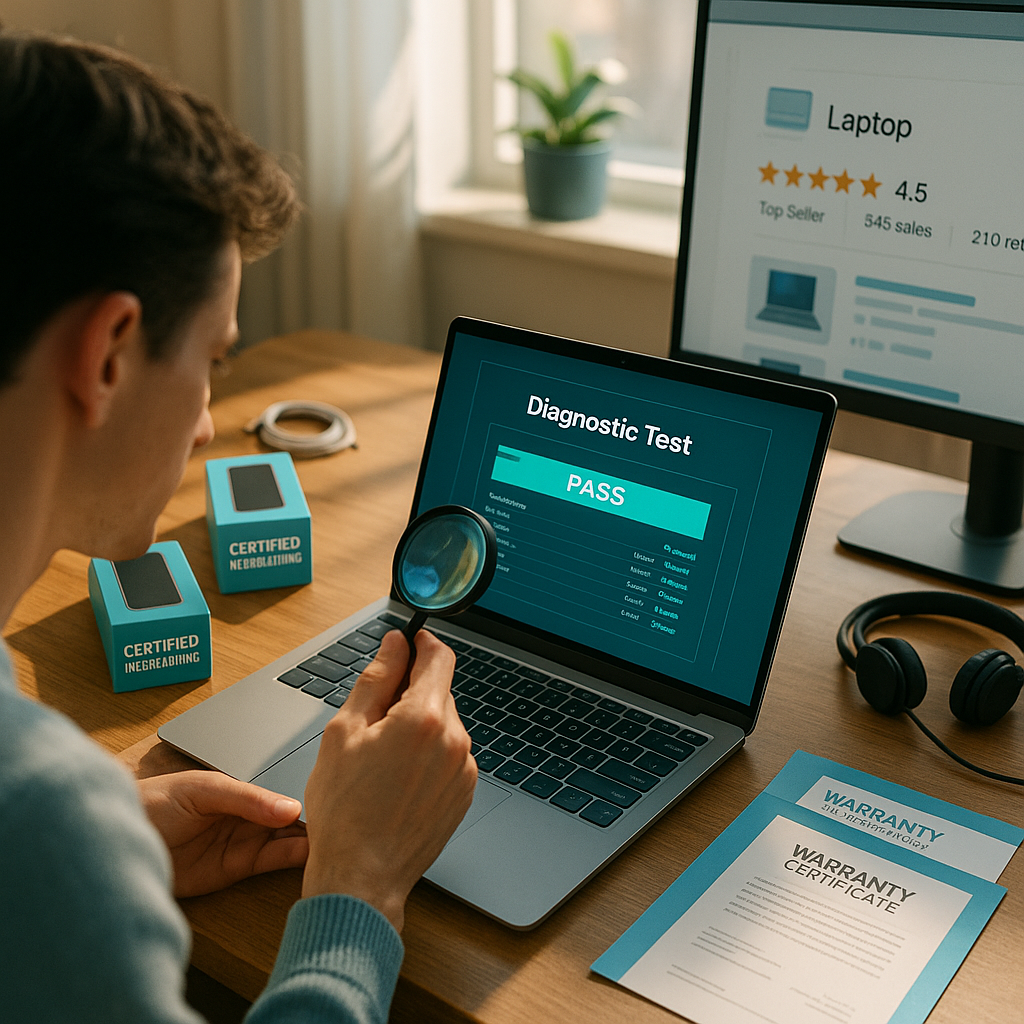

Key Takeaways
Safe shopping for refurbished tech offers significant savings and smart upgrades, provided you know how to identify trustworthy deals and protect your purchase. Here are the essential takeaways to keep you confident and empowered as you navigate refurbished electronics deals:
- Trust Verified Sellers for Peace of Mind: Always purchase from certified retailers or manufacturers who offer warranties and documented quality checks. This ensures your refurbished tech meets strict reliability standards, giving you confidence in your upgrade.
- Scrutinize Warranty and Return Policies: Strong warranties and hassle-free return options signal a legitimate deal and provide essential protection should the product arrive faulty or fail to meet your expectations.
- Decode Certification Levels Before Purchase: Understand grading terms such as “manufacturer-refurbished” versus “seller-refurbished” to accurately gauge device quality and know what’s included in your purchase.
- Leverage Reviews and Third-Party Ratings: Rely on customer feedback and trusted review platforms for insights into product performance and seller reputation. This helps minimize the risk of disappointment and ensures you’re buying from reputable sources.
- Prioritize Essential Accessories and Condition Details: Check if chargers, cables, or other crucial accessories are included. Review condition details carefully to avoid unexpected compromises in usability.
- Hunt Deals at the Right Time and Place: The best savings often appear during holiday sales, at official refurb stores, and through vetted brands’ direct deals. Shopping strategically and with patience maximizes value.
- Recognize the Hidden Benefits of Refurbished Tech: Beyond the obvious savings, quality refurbished gadgets support sustainability, cut down on electronic waste, and give you access to premium features at an approachable price.
Navigating the refurbished tech market becomes far easier and safer when you know what to look for and where to shop. Up next, we’ll dive into the best sources, common red flags, and expert strategies to help you score unbeatable electronics deals with total confidence.
Introduction
Getting your hands on a dream device for half the price shouldn’t feel like a gamble. Safe shopping for refurbished tech blends major savings with smart, well-informed choices when you know what separates a genuine deal from a risky click. By familiarizing yourself with warranties, certification levels, and signals of a trusted seller, you can transform your next electronics purchase into a satisfying win rather than an expensive lesson. Let’s explore expert tips to spot the best electronics deals, avoid common pitfalls, and elevate your tech experience with confidence.
Understanding Refurbished Tech
Before you go bargain hunting, it’s vital to understand the various types of refurbished products and how they differ in quality and risk.
Un passo avanti. Sempre.
Unisciti al nostro canale Telegram per ricevere
aggiornamenti mirati, notizie selezionate e contenuti che fanno davvero la differenza.
Zero distrazioni, solo ciò che conta.
 Entra nel Canale
Types of Refurbishment
Refurbished technology comes in several distinct categories, each with its own value proposition:
- Manufacturer-Refurbished: These devices undergo rigorous reconditioning, often using original parts and following strict quality controls. Companies like Apple, Dell, and Samsung typically offer such products, which are backed by warranties almost equivalent to new devices. For example, a manufacturer-refurbished smartphone from Apple will include genuine parts and reliable support, minimizing risk for the buyer.
- Seller-Refurbished: Here, authorized third-party companies restore devices to full functionality. Quality may vary somewhat, but reputable refurbishers back their work with transparent documentation and meaningful warranties. For instance, electronics chains and certified third-party refurbishers often provide detailed test reports and customer support, making them a reliable choice for both laptops and smart home gadgets.
- Open-Box: These items are generally products that have been returned unused or have served as display models. They require minimal restoration, but should still undergo testing and cleaning for assurance. Open-box items are particularly popular in retail and e-commerce settings, offering nearly-new products at a substantial discount.
Across other industries, similar refurbishment standards apply. Medical equipment, for example, can be factory-refurbished with guaranteed sterilization and quality testing, while in education, institutions often purchase certified refurbished computers for classroom use to balance budget constraints with reliability.
Grading Systems Explained
Most legitimate refurbishers use standardized grading systems to describe product condition. Understanding these grades is key to making an informed purchase:
- Grade A (Excellent): Little to no cosmetic damage and battery health at 90% or above. Ideal for users who want a device that looks and feels nearly new.
- Grade B (Good): May have light scratches or minor wear, with battery health at 80-89%. These devices function flawlessly and present good overall value.
- Grade C (Fair): Noticeable cosmetic blemishes but remain fully functional with battery life at 70-79%. Grade C items are often ideal for budget-conscious buyers who prioritize function over appearance.
These grades help set clear expectations, ensuring you pay an appropriate price for the device’s condition. Whether buying a tablet for home work, a business laptop, or a refurbished camera for creative projects, knowing the grading system is crucial.
Identifying Trustworthy Sellers
Trust is the foundation of every safe refurbished tech purchase. Finding a reliable seller requires scrutiny at several levels.
Verification Methods
Start by assessing a seller’s certification and authorization. Look for the following:
- Official Manufacturer Partnerships: Sellers who are directly affiliated with brands or manufacturers usually adhere to higher standards and offer better post-purchase support.
- Industry Certifications: Accreditations such as ISO 9001 indicate robust quality management.
- Documented Testing Procedures: Reputable sellers describe their refurbishment and testing methods openly.
- Transparency: Clear channels for customer support and open communication are a must.
For example, in the finance sector, purchasing refurbished payment terminals from authorized vendors ensures both compliance and security. Educational institutions should favor certified refurbishers that specialize in bulk device testing and deployment.
Platform Reputation
When buying through major online marketplaces, due diligence pays off. Evaluate sellers by:
- Checking for detailed seller profiles with physical business addresses.
- Reading reviews that span multiple transactions and several months, rather than just recent ratings.
- Scrutinizing product photos that show the actual device condition, not just stock imagery.
- Observing how sellers respond to inquiries and resolve disputes.
Many platforms have verified seller programs that add another layer of buyer protection, reducing the likelihood of counterfeits or misrepresentation in sectors ranging from consumer electronics to fitness wearables and healthcare tech.
Warranty and Return Policies
Comprehensive support after the sale can be every bit as important as initial product quality.
Essential Coverage Elements
A quality refurbished device should always come with robust warranty coverage. Key features to seek out include:
- At least 90 days of protection covering major components.
- Explicit policies addressing defects, malfunctions, or performance issues.
- Specific terms regarding battery health and replacements, especially for smartphones and laptops.
- Transparent information on repair or replacement processes.
Avoid sellers who offer less than 30 days of coverage or impose complicated claims procedures. This applies across industries. Whether you’re buying consumer gadgets, refurbished lab equipment, or even reconditioned office furniture for your business, warranty length and clarity are key.
Return Window Considerations
Generous and transparent return policies signal a legitimate and customer-focused seller. Look for:
- A minimum 14-day window for testing and evaluation.
- Free return shipping on items that are defective or not as described.
- Full refunds for products that don’t match their listing or quality promises.
- Clear documentation requirements for initiating returns.
Longer return windows not only protect you but also demonstrate seller confidence in the refurbishment quality, a principle that holds true whether sourcing refurbished smartphones, business monitors, or even secondhand industrial tools.
Inspection Checklist
Your role doesn’t end once your package arrives. Safeguard your investment by thoroughly examining the product inside and out.
Physical Assessment
On receiving your refurbished device, conduct checks such as:
Un passo avanti. Sempre.
Unisciti al nostro canale Telegram per ricevere
aggiornamenti mirati, notizie selezionate e contenuti che fanno davvero la differenza.
Zero distrazioni, solo ciò che conta.
Entra nel Canale
- Inspecting all ports, jacks, and charging connections for signs of wear or malfunction.
- Testing every button for proper functionality and responsiveness.
- Examining the display for dead pixels, discoloration, or brightness inconsistencies.
- Running battery health diagnostics to confirm promised longevity.
- Checking for water damage seals or indicators, especially for mobile devices.
Apply the same scrutiny for refurbished equipment in other contexts. For example, a refurbished camera’s lens or a medical device’s connectors should be as carefully inspected as a smartphone’s charging port.
Software Verification
Ensuring the integrity of your device’s software is critical:
- Confirm the device has been factory reset, removing all prior data.
- Verify the authenticity of the pre-installed operating system.
- Check for activation locks or previous user accounts.
- Test all primary functions, features, and connectivity options.
If you spot any issues, contact the seller immediately and document your findings to smooth the returns or support process. This practice applies broadly, from refurbished e-readers to point-of-sale systems and even network equipment.
Timing Your Buy
Maximizing savings and product availability relies on smart timing and strategic shopping.
Seasonal Opportunities
Timing can play a major role in finding the best refurbished deals:
- Back-to-School Season (August to September): Retailers often restock and discount refurbished tech for students and educators.
- Post-Holiday Period (January to February): Expect surges in inventory from returns and overstock, leading to price drops.
- New Model Releases: When new versions launch, retailers often reduce prices on previous generation refurbished devices.
Monitoring price trends with comparison tools or price trackers helps you identify optimal buying moments. These strategies work across product types, from smart home gear to professional business laptops and desktop computers.
If you want a thorough breakdown of calendar-based buying windows and key discounts, our guide to seasonal tech shopping can help you time your purchase for maximum savings.
Market-Smart Shopping
Focus your shopping strategy on reputable sources to reduce risk:
- Manufacturer-authorized refurbishment programs
- Certified pre-owned sections at major retailers
- Official outlet stores offering warranties and professional support
- Online marketplaces with transparent, proven seller histories
Such targeted shopping not only enhances value, it minimizes risk. Whether you’re investing in refurbished audio equipment, medical devices, or security cameras, picking your source carefully is worth the effort.
For in-depth roundups of safe, eco-conscious options, check out the best refurbished tech deals worth buying for trusted sources and tips.
Hidden Benefits
Choosing refurbished tech is about more than just savings. There are significant long-term benefits for both your wallet and the planet.
Environmental Impact
Each refurbished purchase meaningfully reduces electronic waste, supports sustainability, and lessens demand on raw materials:
- Prevents functional devices from ending up in landfills
- Decreases the need for new manufacturing, conserving energy and resources
- Reduces overall carbon emissions by extending the lifecycle of electronics
- Helps advance circular economy initiatives (an emerging priority in sectors from healthcare to consumer electronics and education)
If you’re curious about the bigger sustainability story, see our feature on how refurbished devices cut e-waste and advance the circular tech economy.
Cost-Effectiveness
Refurbished devices offer financial advantages extending well beyond the initial price tag:
- Access professional-grade or high-end devices at more affordable prices
- Afford upgraded features or newer models that may otherwise be out of budget
- Experience slower depreciation compared to buying new, preserving more of your investment
- For businesses, there may be potential tax incentives for purchasing refurbished technology
These benefits make refurbished purchases a strategic choice, especially for freelancers assembling a home office, families upgrading multiple devices, or organizations seeking budget-friendly IT solutions.
Red Flags and Mistakes
Avoiding the most common pitfalls will help keep your refurbished tech experience smooth and risk-free.
Warning Signs
Stay cautious if you notice:
- Prices that seem implausibly low compared to the market average.
- Listings lacking detailed product histories or transparent refurbishment details.
- Only stock or generic photos instead of clear images of the actual product.
- Sellers using high-pressure tactics or offering limited-time “urgent” discounts.
- Minimal or nonexistent warranty protection.
These red flags can crop up in any sector, from consumer electronics to refurbished home appliances and scientific instruments.
Security Considerations
Protect your purchase and personal data by:
- Always using secure (traceable) payment methods
- Saving and documenting all communication with the seller
- Verifying seller contact information and checking their track record
- Scrutinizing reviews, especially those mentioning security incidents or counterfeit concerns
- Checking device blacklist status for smartphones, networking equipment, or devices tied to carrier accounts
These extra steps safeguard your interests whether you’re upgrading your smartphone, expanding a business tech suite, or investing in refurbished medical technology.
For more on keeping your transactions—and new gadgets—safe, our cyber hygiene checklist covers foundational security tips for all online buyers.
Conclusion
Navigating the refurbished tech market rewards savvy and well-informed shoppers. By understanding refurbishment types, reliably identifying certified sellers, and carefully reviewing warranties and return policies, you unlock access to high-quality devices without compromise. Thorough inspection and strategic timing can yield the best possible value, turning refurbished purchases into both a smart upgrade and a win for sustainability.
Choosing refurbished tech isn’t just about saving money. It’s about participating in a more responsible and resource-efficient digital world. Every carefully vetted purchase helps reduce electronic waste and supports a shift toward the circular economy that benefits consumers, businesses, and the planet alike.
Looking ahead, those who approach refurbished technology with curiosity, trust, and a focus on sustainability will be best equipped to embrace future trends. As both innovation and eco-consciousness accelerate, the real question isn’t simply whether you’ll choose refurbished tech, but how you’ll use smart shopping strategies to drive value and make a positive impact. Confidence and responsibility are becoming the new hallmarks of connected living.




Leave a Reply